The Job Ad That Already Said No
This article will count 0.25 units (15 minutes) of unverifiable CPD. Remember to log these units under your membership profile.
You read the spec. You tick every box (the qualification, the years, the SAQA-recognised designation, the clean compliance record). Then you hit the last line: one specific designation is listed as essential, and it isn’t the one you hold.The door shuts. Not because you can’t do the work, but because of a title you don’t carry.
Most of us have felt that quiet “no” before we even pressed apply. And here’s the part that stings: nothing about that filter measures whether you’d actually be good at the job. It just decides you’re not.
The exclusion isn’t about competence. It’s structural.
A job advert is a small thing. But a single designation line in it can wall off a whole career path. When an employer makes one specific designation a blanket precondition for a role that isn’t reserved by law (a finance manager seat, an internal accounting post, an SME advisory role), every other recognised, SAQA-registered professional is filtered out at the threshold. Not assessed. Not interviewed. Filtered.
If that frustration feels familiar, it should. It’s the same instinct we unpacked in NCR 67(2) – They Closed the Door. We’re Opening It For You: being blocked by a rule that can’t actually justify why the line sits where it does. You qualified. You complied. You built the competence. And a default filter still treated your capability as if it didn’t exist.

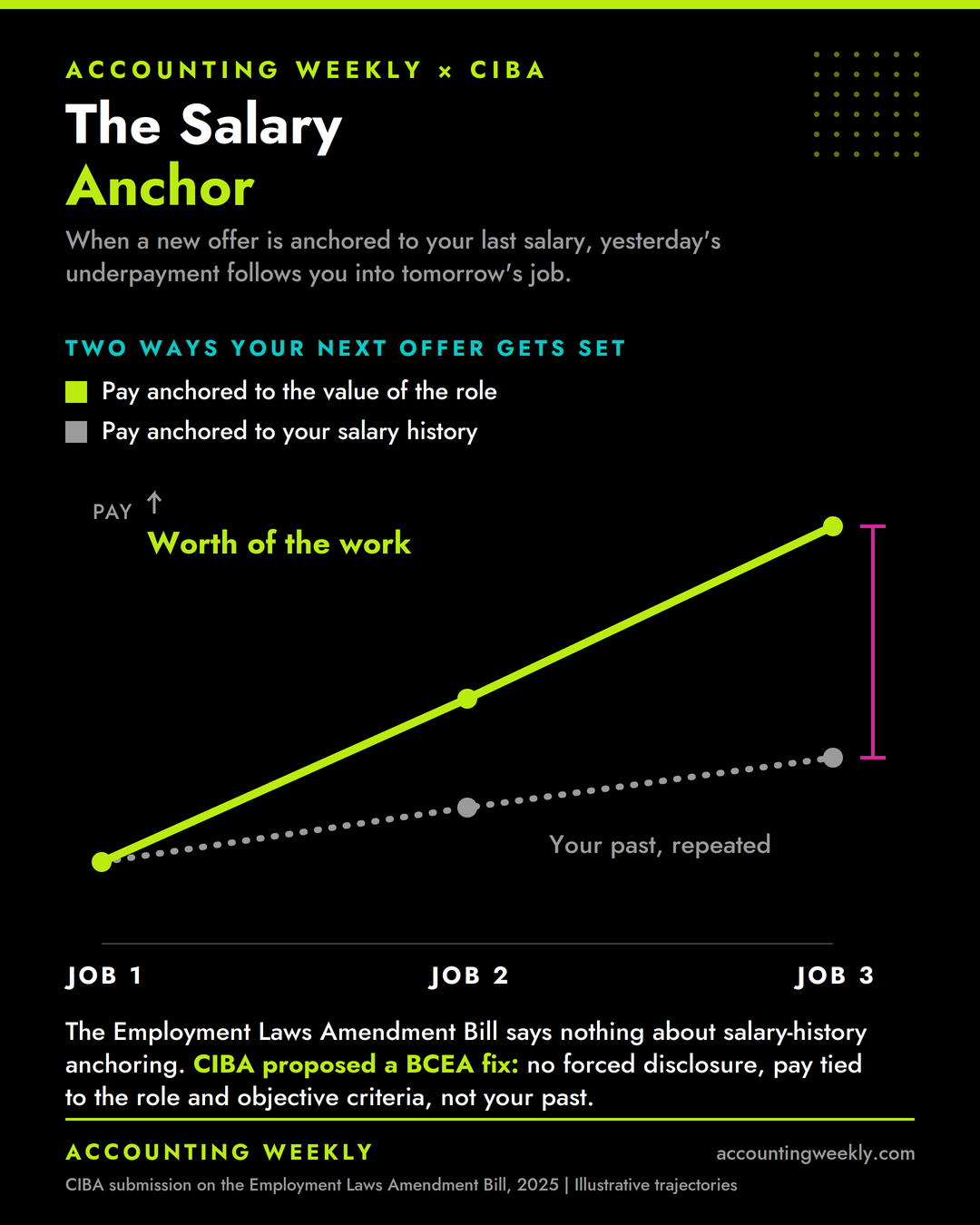
There’s a second, quieter version of the same problem, and it costs you money. When you move jobs, the new offer often gets anchored to your last salary. So if you were underpaid before, frequently for reasons that had nothing to do with your ability, that underpayment follows you into the next role. Your pay tracks your history instead of the value of the work in front of you.
CIBA didn’t just complain. It filed.
In March 2026 the Minister of Employment and Labour opened the Employment Laws Amendment Bill, 2025 for public comment, a wide reform package touching the Basic Conditions of Employment Act, the Employment Equity Act, the Unemployment Insurance Act and the National Minimum Wage Act. There is plenty of good in it: stronger on-call protections, gender-neutral parental leave, severance pay doubled from one to two weeks per year of service, and tighter enforcement.
CIBA backed those reforms, and then named the two gaps that hit our members hardest at the point of entry into a job:
1. Salary-history anchoring. The Bill says nothing about whether an employer can force you to disclose your current or previous pay and use it to anchor the offer.
2. Unjustified designation filters. The Bill says nothing about employers demanding one specific designation for roles where the law and the actual duties don’t require it.
So CIBA put concrete drafting on the table. A proposed BCEA section that an employer may not compel you to disclose your salary history, with pay tied to the role and objective criteria rather than your past. And a proposed EEA section that a specific designation can only be required where it’s objectively justified by the inherent requirements of the job, with equivalent qualifications and recognised professional standing given a fair look.
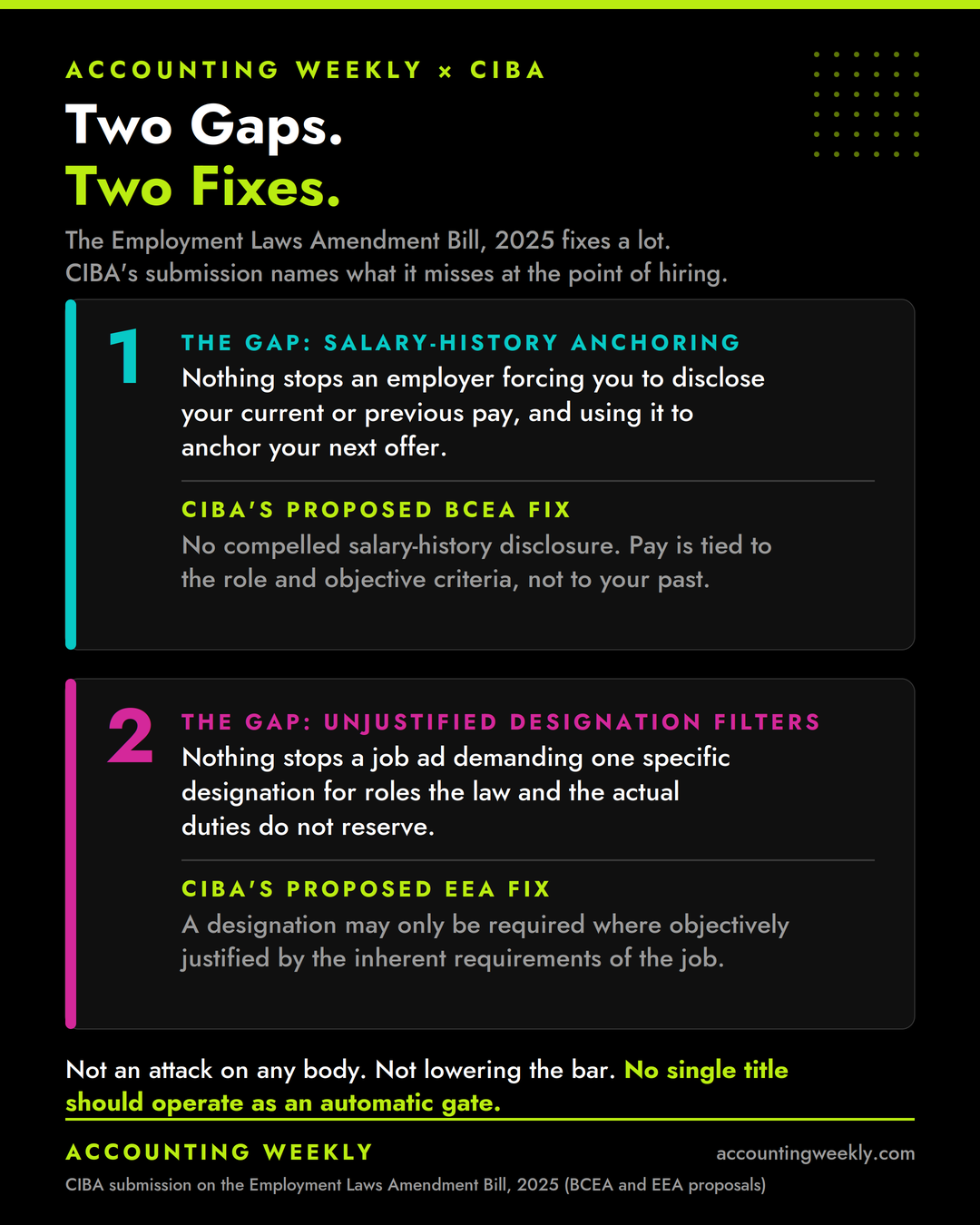
Read carefully: this is not an attack on any one body, and it’s not a call to lower the bar. The point is narrower and harder to argue with. Where the work can competently be done by professionals from more than one recognised pathway, no single designation should operate as an automatic gate. Your designation is not a lesser version of anyone else’s. It is a different, recognised kind of expertise, and the law shouldn’t pretend otherwise.
What this actually means for your practice and your pay
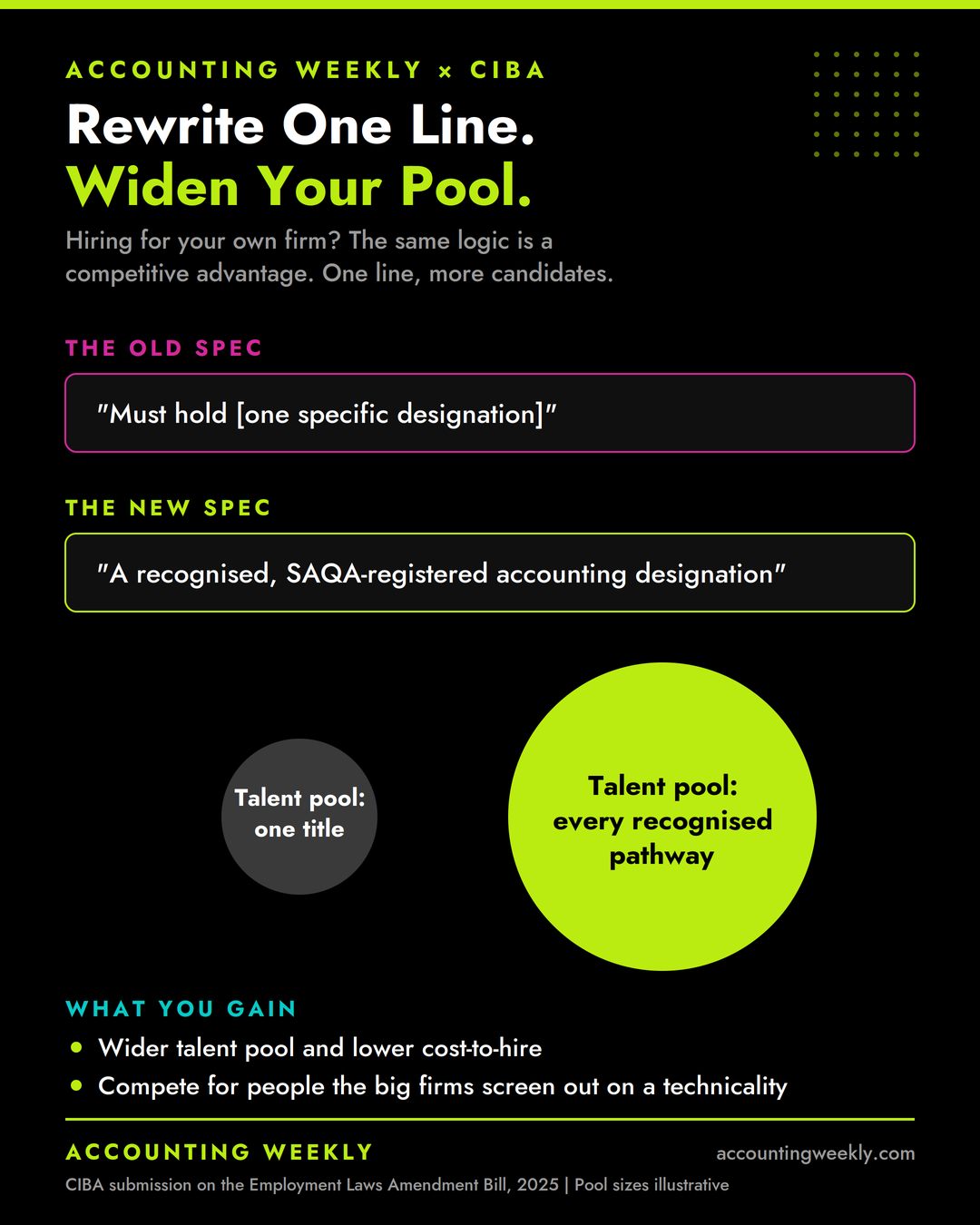
For the small-firm owner reading this: when you hire, the same logic is a competitive advantage. Writing “a recognised, SAQA-registered accounting designation” instead of one narrow title widens your talent pool, lowers your cost-to-hire, and lets you compete for people the big firms screen out on a technicality. In a price-sensitive market, that’s margin.
For the practitioner: stop letting your past anchor your future. As we argued in If Clients Haggle You Positioned It Wrong, most accountants aren’t underpaid, they’re under-positioned. The fix is the same whether you’re quoting a client or negotiating a salary: lead with the value of the work, name your designation’s scope and recognition with confidence, and don’t volunteer your old number as the starting point.
Your takeaway today: In your next application or rate negotiation, don’t anchor on what you used to earn. Anchor on what the role is worth and what your designation lets you do. And if you run a firm, rewrite one job spec this week to recognise equivalent pathways. One line, more candidates, less wasted time.
When fewer competent professionals get filtered out, more SMEs get the finance skills they’re starving for, and that’s not abstract. That’s businesses surviving, jobs holding, and the profession finally being rewarded for the work it already does.
👉 Join CIBA and we’ll give you the recognised designation, the legal backing, and the standing to compete for the role (and the pay) your work already earns.
Further Reading
• NCR 67(2) – They Closed the Door. We’re Opening It For You (Why structural rules block capable practitioners, and how to push back)
• If Clients Haggle You Positioned It Wrong (How positioning, not skill, decides what you get paid)
• Who Can Sign What? Understanding Your Professional Boundaries as a CIBA Member (What each CIBA designation legally empowers you to do)
• Why “Doing Everything” Is Costing Your Firm Money (Why specialisation and clear positioning beat being a generalist)


Choose Your Path to Exclusive Insights
Stay ahead in the world of accounting with premium content designed for professionals like you. Access expert articles, industry trends, and essential resources. Become a CIBA member and claim your CPD hours from CIBA.
CIBA Member Access
R250.00 FREE!
100% Discount when you become a CIBA Member. Join now to claim your CPD Hours. Register here: https://accounts.myciba.org/register
Premium
R250.00
Every month

Trending