

Latest News

A business can make a profit and still run out of money to pay its bills. A cash flow forecast helps you see when money will come in, what needs to be paid and how much will be left in the bank. Learn how to prepare a simple cash flow forecast, plan for upcoming expenses and avoid cash shortages before they become a problem.

A business can make a profit and still run out of cash. That is why every small business needs a proper budget. Business accountants can help clients plan for expenses, prepare for tax payments, manage cash flow and avoid running short of money. A budget should not just be prepared once a year. It should be checked every month to see what is working, what is costing too much and where changes are needed.

IFRS 18 replaces IAS 1 for financial years starting on or after 1 January 2027, and because comparatives must be restated, this year's profit is already part of the change. This guide explains who the standard applies to, the five new categories in the statement of profit or loss, the narrow investing and financing rules, management-defined performance measures and the cash flow changes. It includes a worked example and a checklist for practitioners and finance teams preparing now.
Accounting & Assurance
Trending Topics
Practice Management

Have you ever had a “contractor” who works your hours, at your desk and for nobody else? Watched a trainee leave with three clients despite her downloaded restraint? Been tempted to recover a SARS penalty from a junior’s salary? Most practice owners who land at the CCMA made a sensible decision and got there the wrong way. Here is how I would answer those three questions if you brought them to my office, and where I would start this month.

Most small practices run on templates inherited in year one and never read as if their own. The report wording describes someone else's engagement. The signature is placed by software before the final version is opened. The word "draft" is doing work it cannot do. None of it is meant dishonestly, but the reader cannot see what you meant, and a disciplinary committee does not need a victim. Your documents must match your engagement. The check takes an afternoon.

Most insolvencies build over months, and the accountant is often the first to see them in the numbers. Deferred VAT and PAYE, an overdraft at its limit and suppliers demanding cash may mean a client has crossed a legal line. This article explains the two insolvency tests, the six-month financial distress rule, when directors become personally liable and how creditors are paid, and sets out when you should document your concerns and refer clients for specialist advice in good time.
Trending News
Listen to our Podcast

Listen to an insightful discussion on the latest legal developments in South Africa's fight against corruption.
Edward James, Corporate Crime Risk Lead for Africa at Pinsent Masons, will shed light on the newly introduced ‘failure to prevent' corruption offence in South Africa.
In the wake of the Judicial Matters Amendment Act, businesses in South Africa are facing a pivotal moment in their anti-corruption efforts.

Listen to the impactful discussion on the upcoming Moore Opportunity Vacation Experience (MOVE) with Dillen Breitenbach of Accounting Warriors!
On 22 April 2024, CIBA CEO MBA Nicolaas van Wyk hosted Dillen to unpack this exciting program from Moore.
Key highlights:
The Effectiveness of Linkedin as a learning platform
Eligibility criteria for university students
Experiences from boardroom and practical sessions
Benefits of networking
Understanding Moore's entrepreneurial culture
Tips on making your MOVE application stand out
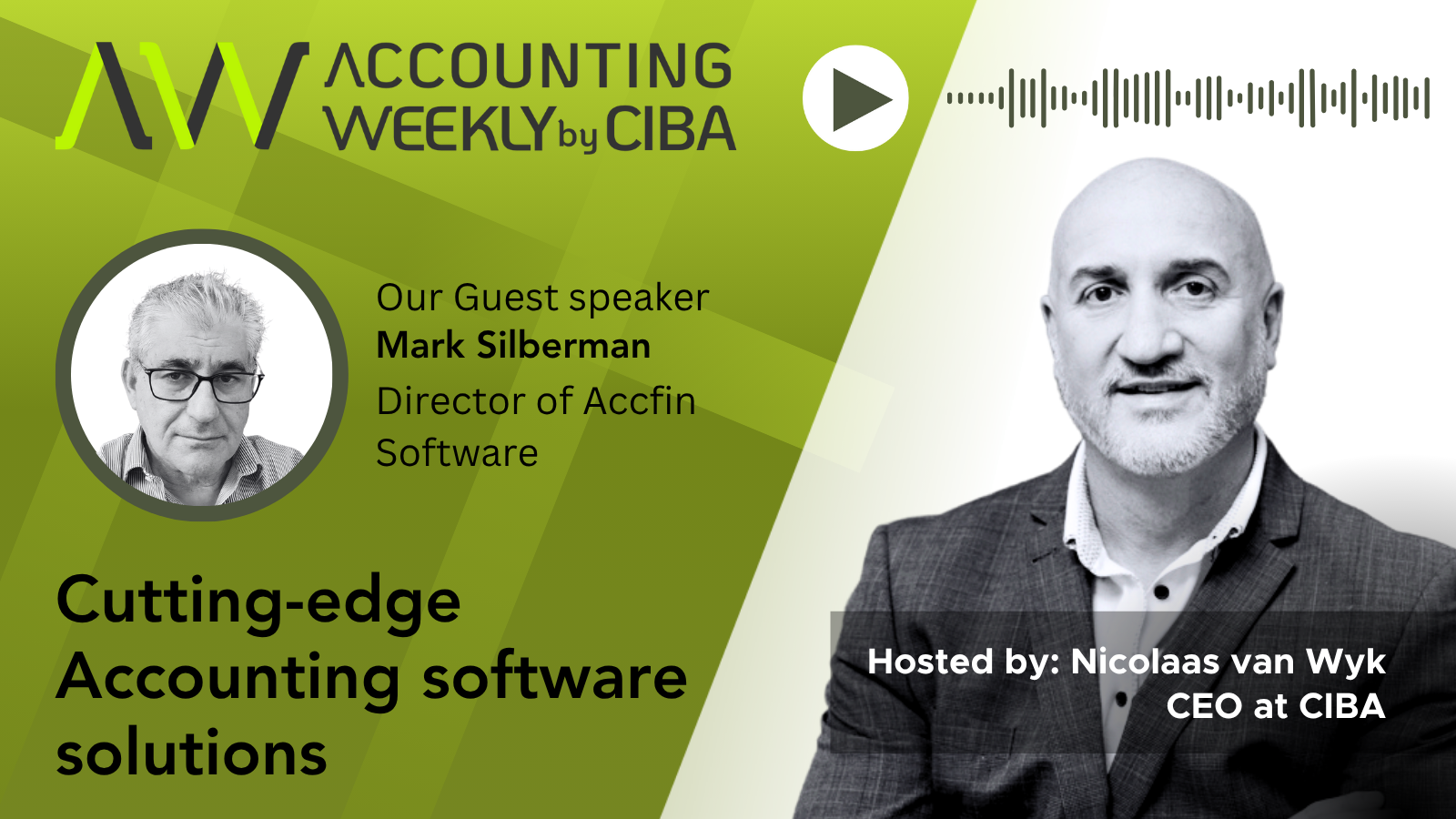
Listen to the insightful conversation with industry leader Mark Silberman, Director of Accfin Software, on Accounting Weekly's channels!
CIBA CEO, Mr. Nicolaas van Wyk, sat down with Mark to discuss:
Cutting-edge accounting software solutions
Innovations driving the future of the profession
Compliance & Risk Aversion in modern practices
Company law & secretarial best practices

List to an engaging live podcast interview with Telita Snyckers, former SARS lawyer and acclaimed author.
On 12 April 2024 , CIBA CEO MBA Nicolaas van Wyk hosted Telita Snyckers to explore the intriguing worlds of tax administration and the tobacco industry.
Key Topics:
Dirty Tobacco: Unraveling the secrets behind tobacco smuggling
Criminal Investigations: Exploring their strategic value in tax administration
Insights from Telita's groundbreaking book and extensive experience

Liste to an insightful interview with Professor Steven Firer CEO at FirerForensics
On 12 April 2024 , CIBA CEO MBA Nicolaas van Wyk hosted Professor Steven Firer where they delve into a thought-provoking discussion on the latest trends and challenges in the accounting profession.

CIBA CEO, Nicolaas van Wyk, sat down with Brian Kazungu, a seasoned professional in media, literature, and business development in an exclusive interview on 12 April 2024.
Brian shared his expertise and perspectives on literature, media trends, and modern business approaches.
With his interdisciplinary expertise and unique blend of academic knowledge and practical experience, Brian delivered a dynamic discussion that inspires and informs.
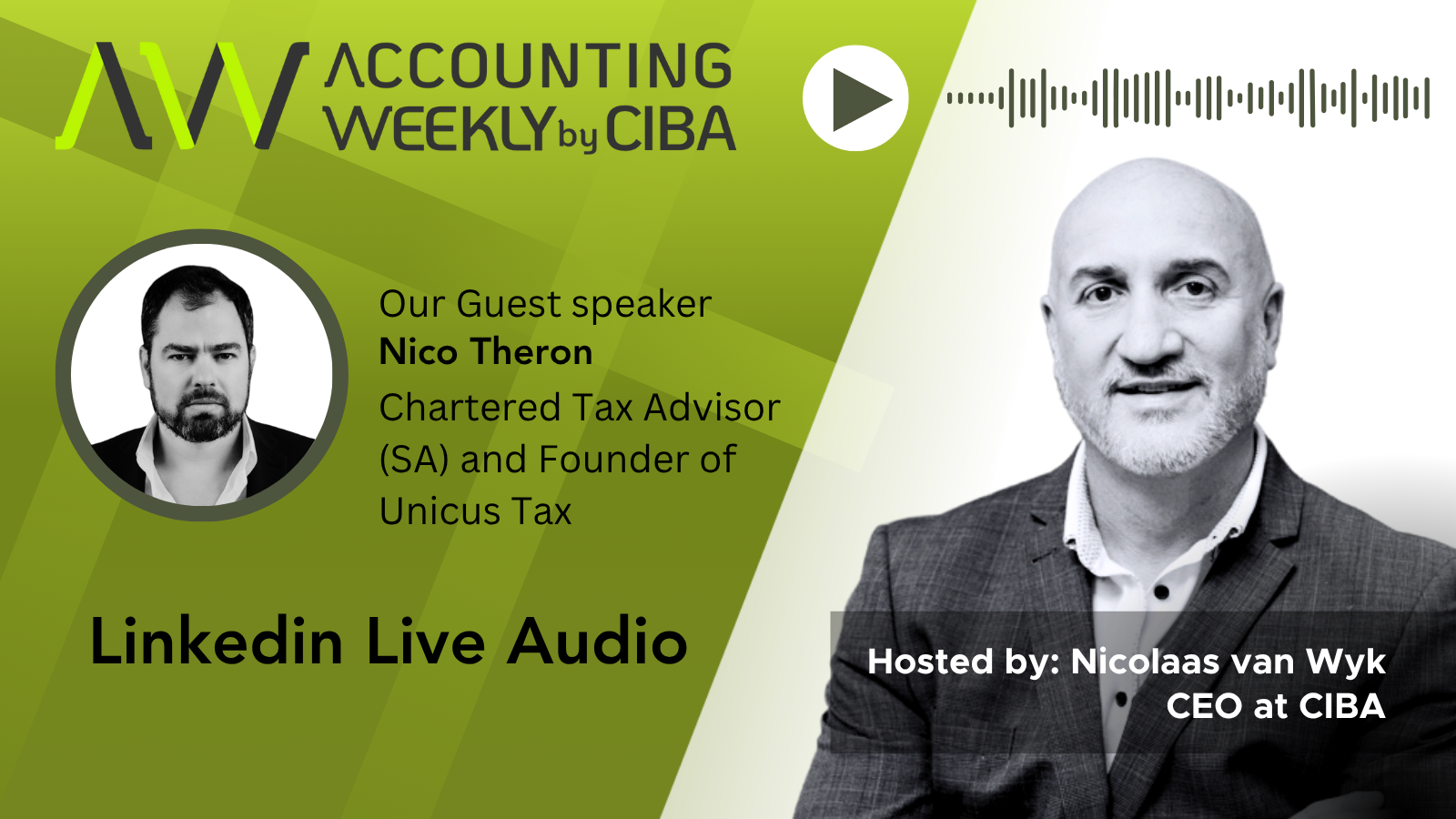
Listen to an insightful discussion on tax dispute resolution with Nico Theron, Founder of Unicus Tax Specialists SA and Chartered Tax Advisor (SA).
Dive deep into Tax Dispute Resolution Calculators and discover their potential:
Determine due dates effortlessly.
Track days lapsed with precision.
Gain access to Tax Dispute Templates for smoother proceedings.
Navigate through Tax Dispute Flowcharts to strategize your next move effectively.

Tune in to an inspiring discussion on the evolution of accounting and fintech with Mariska Fernhout, Financial Director of DataGrows.
CIBA CEO Nicolaas van Wyk hosted Mariska to explore her journey from a BCom student to co-founding a successful fintech company.
Key highlights:
The journey from BCom accounting to fintech innovation
How DataGrows is transforming practice management for accountants
The importance of staying close to clients and adapting services
Overcoming challenges in the accounting profession with technology
Insights on the South African fintech landscape
Tips for aspiring accountants on navigating career paths and seizing opportunities
