

This year's profit is already an IFRS 18 number
IFRS 18 replaces IAS 1 for financial years starting on or after 1 January 2027, and because comparatives must be restated, this year's profit is already part of the change. This guide explains who the standard applies to, the five new categories in the statement of profit or loss, the narrow investing and financing rules, management-defined performance measures and the cash flow changes. It includes a worked example and a checklist for practitioners and finance teams preparing now.

Financial Statement Analysis: What Accountants and Bookkeepers Should Be Looking For
Financial statements show how a business is performing, but accountants and bookkeepers need to look beyond the figures. By checking profit, cash flow, debtors, creditors and expenses, they can identify problems early and help business owners make better decisions. This article explains what to look for when analysing financial statements and how to spot financial risks before they become serious.
Manchester City's £900m Accounting Battle: When Does Clever Structuring Become Misrepresentation?
Manchester City has been found guilty of serious breaches of Premier League financial rules, and says it will appeal. The accounting question behind it: when does clever structuring become misrepresentation?

Agreed-Upon Procedures: When You Need the Facts, Not an Audit
Agreed-Upon Procedures (AUP) engagements are useful when a client needs an accountant to check specific information without requiring a full audit. The accountant and client agree on exactly what will be checked, the accountant performs those procedures and reports only what was found. No audit opinion or assurance is provided, and the person using the report decides what the findings mean. Agreed-Upon Procedures When You…
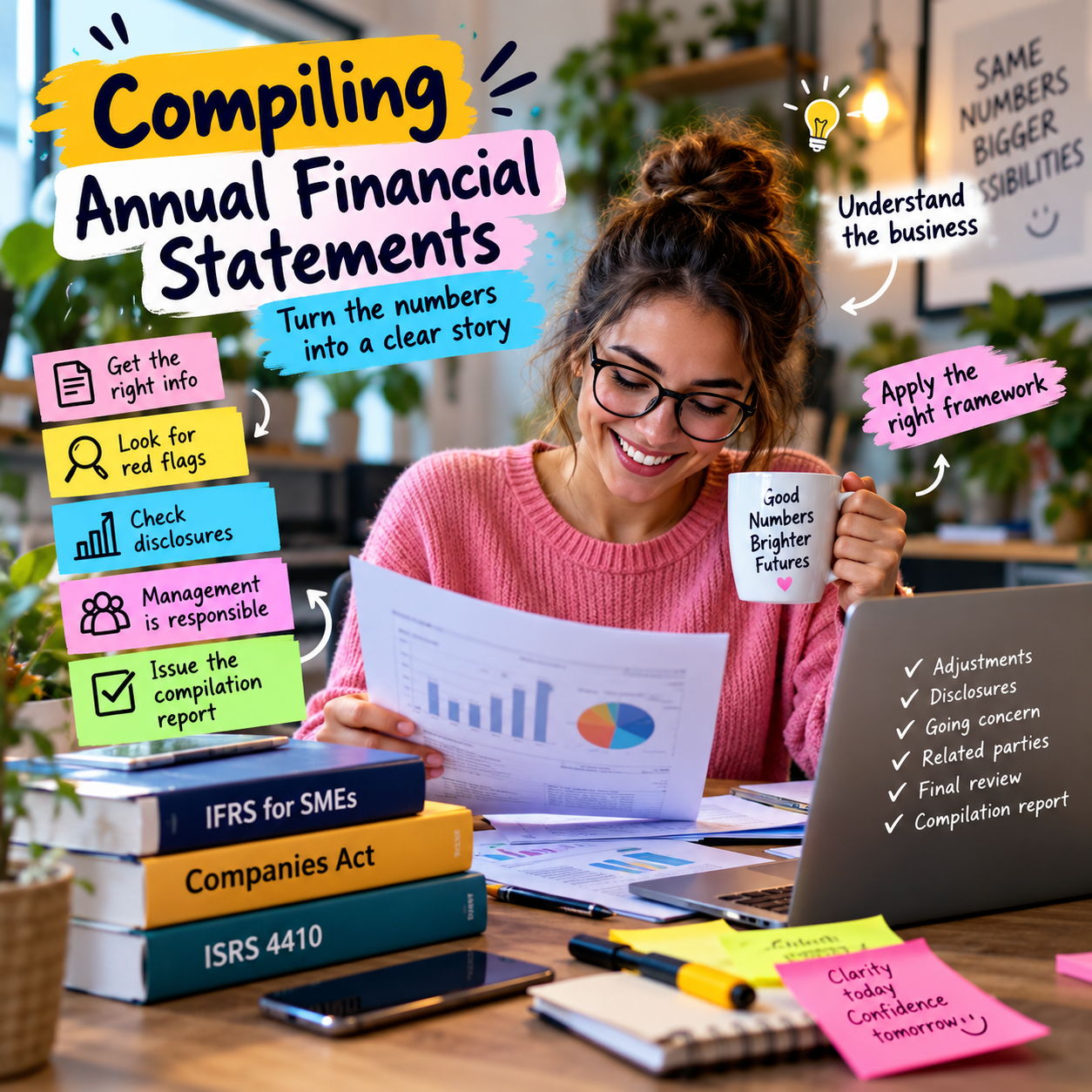
Compiling Annual Financial Statements: A Practical Guide for the Compiler
Compiling annual financial statements is not just about moving numbers from a trial balance into a report. You need to understand the business, use the correct accounting framework, check that the figures make sense, look for missing information and make sure the right disclosures are included. Management remains responsible for the financial statements, but as the compiler, you still need to do the job properly.

Spotting Financial Statement Fraud: The Red Flags You Can Actually See
Financial statement fraud is not always easy to spot, but there are often warning signs if you know what to look for. Profits may be increasing while cash is running out, debtors may suddenly grow, strange journal entries may appear at year-end, or important documents may keep going missing. Sometimes it is not one big thing that gives fraud away, but several small things that simply do not make sense. This article looks at the practical red flags you may actually see in a business and the questions you should start asking when the numbers do not match the real story.

Good Intentions Are Not Enough: Simple Governance for NPOs
Non-profit organisations are built on trust, but trust alone is not enough to protect the organisation and its money. Good governance means having clear responsibilities, proper approvals, regular checks and good financial records. Simple controls, such as having more than one person involved in payments and checking the bank account every month, can prevent mistakes and help identify problems early. These basic steps protect the NPO, its staff, its funders and the people it was created to help.

Withholding Tax: What It Is, How It Works and How to Account for It
Withholding tax is tax deducted from a payment before the money is paid to the person or business that earned it. This article explains how withholding tax works, who must deduct and pay it, and how both the payer and the recipient should account for it. It also explains why the full income must still be recorded, even when only the amount after tax is received in the bank account.

Bargaining Councils: Is Your Client Already Bound by One?
Many businesses do not realise that Bargaining Council rules apply to them. If your industry and area are covered by an agreement, your business may have to follow its wage and benefit rules, even if you never joined or signed anything. Failing to comply can lead to large back pay claims.
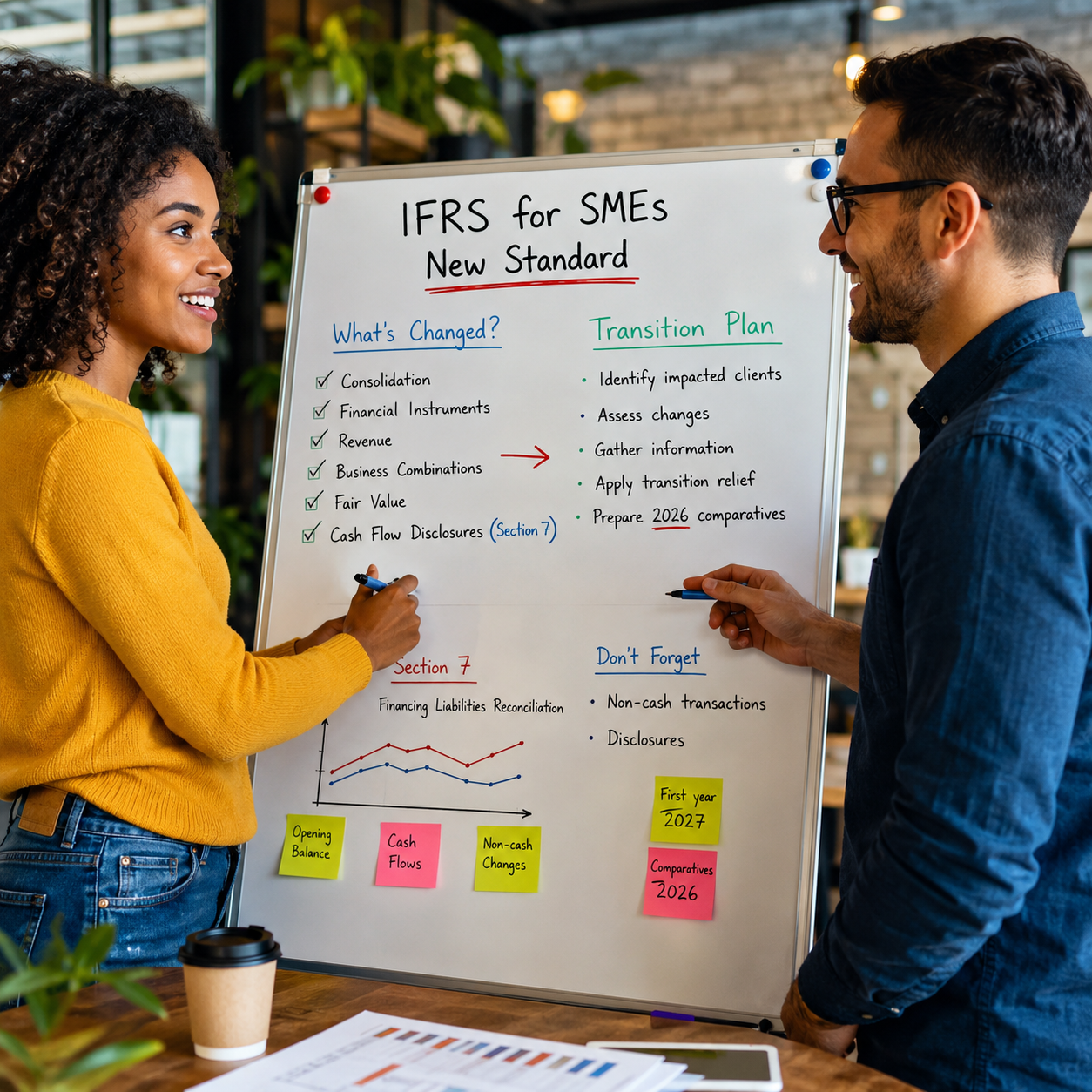
Moving to the New IFRS for SMEs Standard: Section 7 and Getting Ready for 2027
The third edition of the IFRS for SMEs Standard applies from 1 January 2027, but accountants need to prepare now. In this final article, we look at the new Section 7 cash flow disclosures and the practical steps needed to move clients from the old standard to the new one.

Revenue Recognition Under IFRS for SMEs: How to Apply Steps 4 and 5 to Real Contracts
Your construction client has been recognising revenue at completion for fifteen years. Under the new Section 23, that might be wrong. Not fraud. But wrong enough that the profit figure, the balance sheet, and what the bank sees at year end all look different. The new rules turn on one word: control. Revenue goes in when control passes to the customer. Not when you invoice. Not when you get paid. For a builder on a client's land, that is every month as the work progresses. For a property developer selling off-plan, it depends entirely on what the contract says. Get it wrong and you get the year wrong.

School Financial Statements: What Gets SGBs Into Trouble
A school hands you a file in February. A box of invoices, one bank statement, and minutes where the finance committee approved last year's numbers in a single line. The chairperson wants your signature by Friday. Sign it as presented and part of someone else's liability becomes yours. A second bank account. Missing quotations. Irregular expenditure nobody disclosed. South Africa has 23,381 public schools and most files are not ready. Here are the five failures and the eight checks.
Revenue Recognition Under IFRS for SMEs Just Got Smarter
Revenue recognition has changed, and every SME accountant needs to understand why. The new IFRS for SMEs Standard introduces a clear five step model that replaces old rules with a more consistent approach. In this article, you will learn how to identify a contract, understand what your client has promised, and determine the correct transaction price. These first three steps build the foundation for recognising revenue correctly and preparing financial statements with greater confidence and accuracy.

Bought a Business? Meet IFRS for SMEs Section 19
Your client has bought a business, celebrated the deal, and now expects straightforward accounting. Not so fast. The revised Section 19 introduces five major changes that affect goodwill, acquisition costs, earn-outs, step acquisitions, and non-controlling interests. Miss one, and the financial statements could be wrong from day one. Here is a practical, jargon-free guide to the rules every accountant should understand before the next acquisition lands on their desk and keeps clients free from costly accounting surprises after closing day.
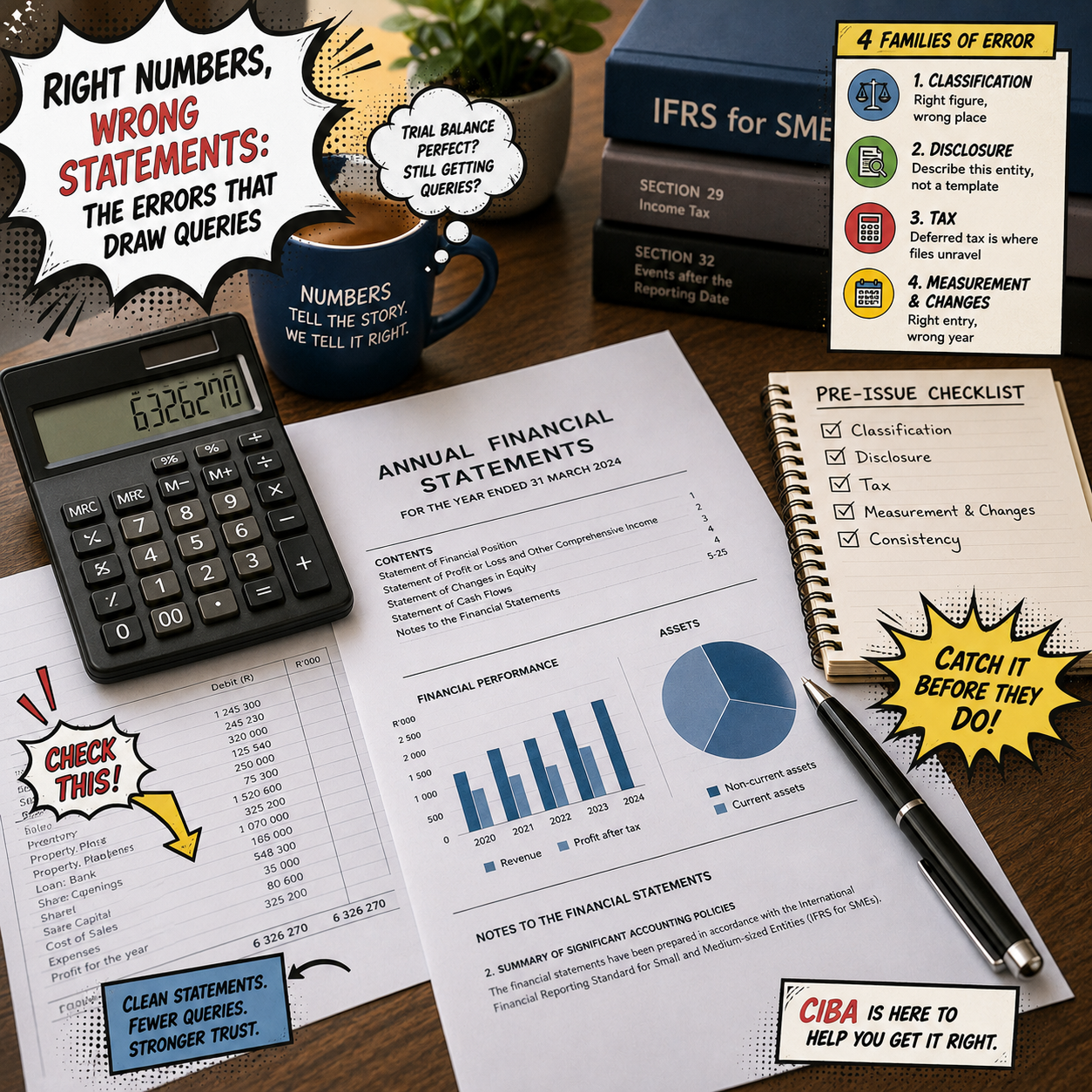
Right Numbers, Wrong Statements: The Errors That Draw queries
A trial balance can be perfectly correct and still produce a set of annual financial statements that SARS, the bank and the reviewer keep sending back. The difference is rarely the arithmetic; it is a handful of classification, disclosure and tax errors that repeat across SME files. Here are the ones to watch, grouped, with a checklist you can run before sign-off.
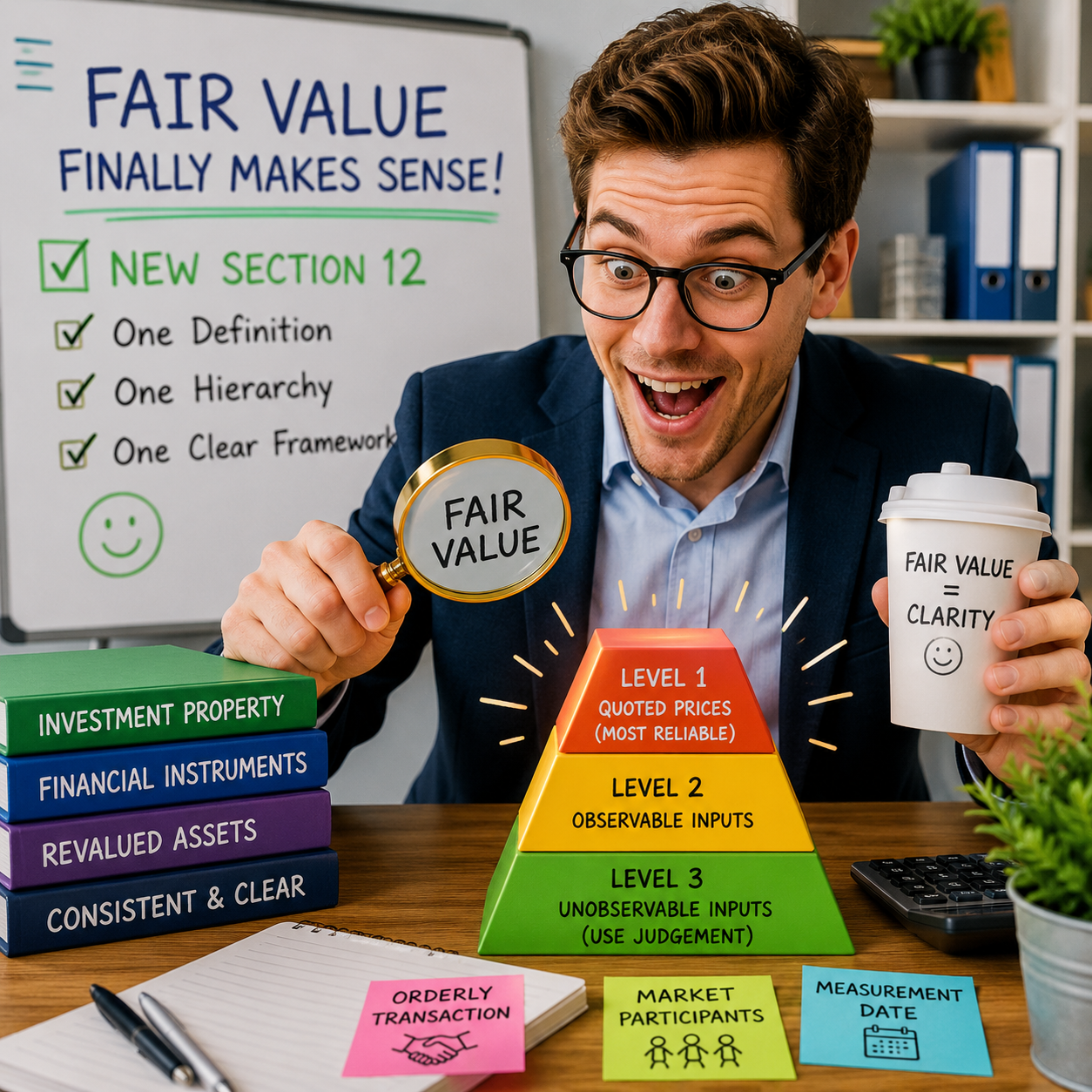
Fair Value Finally Makes Sense: The IFRS for SMEs Reset
Fair value has always been part of IFRS for SMEs, but the rules were not always clear. Different sections used different guidance, which often caused confusion. The new Section 12 changes this by providing one clear method for measuring fair value across the whole standard. It introduces a simple hierarchy, clear definitions, and better disclosure requirements. This helps accountants apply fair value more consistently and gives users of financial statements a better understanding of how values have been determined and reported.
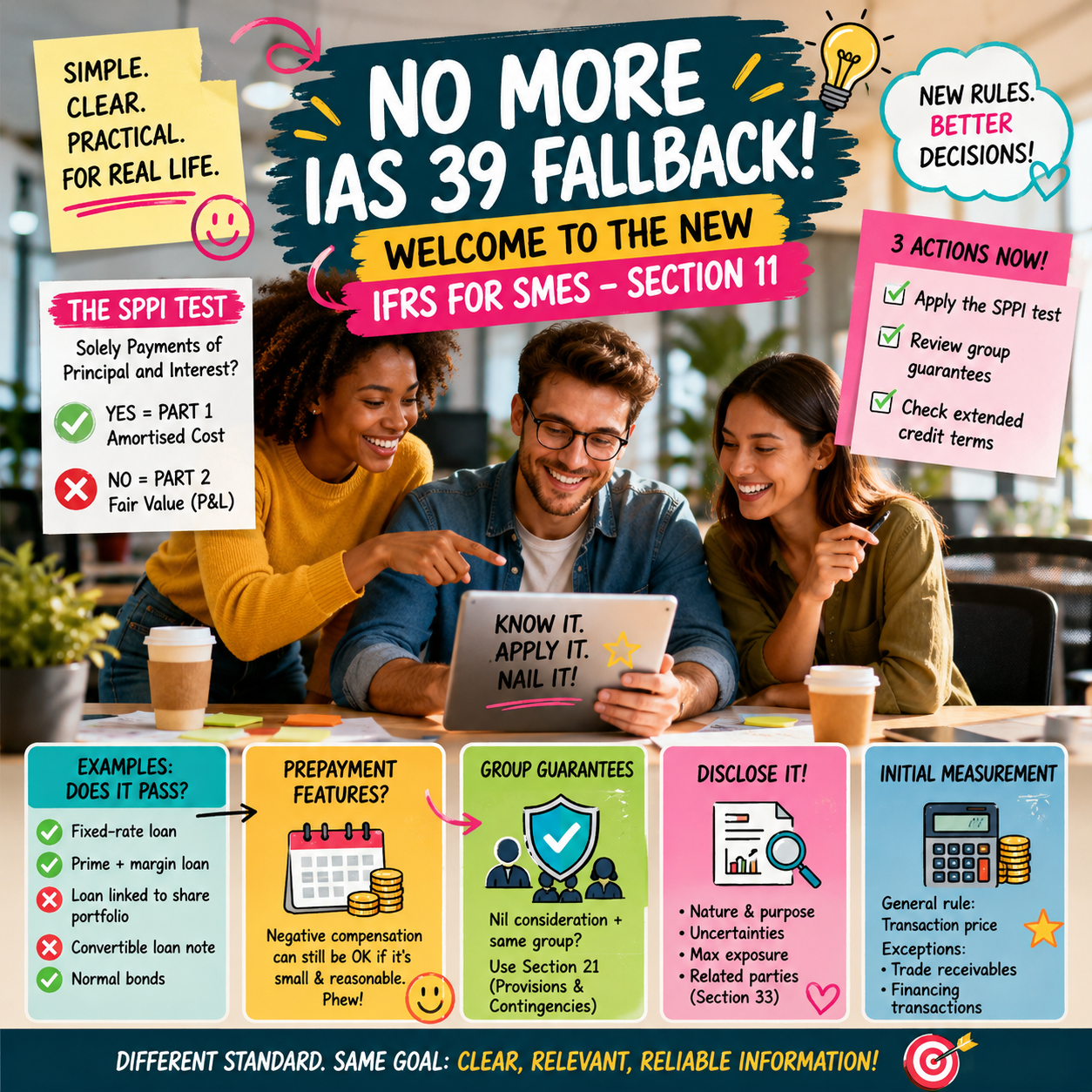
Your Financial Instruments Fallback Is Gone. Here Is What Replaces It.
The IAS 39 fallback is gone, and the new IFRS for SMEs Section 11 brings a simpler, more practical approach to financial instruments. The key change is the introduction of the SPPI test, which helps determine whether instruments are measured at amortised cost or fair value. Accountants should now review financial instruments, intragroup guarantees, and extended credit arrangements to ensure compliance with the third edition. While some rules have changed, the standard remains focused on providing clear, relevant, and reliable financial information for SMEs.

You Think You Know Who Controls That Company. The New Rules Might Disagree.
For many SMEs, the biggest change in the updated IFRS for SMEs is not how much of a company is owned, but who actually controls it. The revised Section 9 introduces a broader definition of control that looks beyond voting rights and focuses on who has the power to direct key decisions, who is exposed to the risks and rewards of the business, and who can use that power to influence outcomes. As a result, family groups, trust structures, and companies with dispersed shareholders may need to reassess whether consolidation is required, even where no single party holds a majority stake.

Assets, Liabilities and the Rule That Changed Everything
What qualifies as an asset? What creates a liability? These questions sit at the heart of every set of financial statements, yet the answers have changed significantly with the latest IFRS for SMEs updates. The revised framework moves away from a strict focus on probability and places greater emphasis on rights, obligations, relevance, and faithful representation. For accountants and business owners alike, this shift could affect how software licences, intellectual property, contractual rights, legal claims, and other uncertain items are recognised and reported in the years ahead.
The Accounting Standard That Quietly Changed Everything
Accounting standards rarely make headlines, but the latest update to IFRS for SMEs is one of the most significant changes in years. With major revisions to revenue recognition, business combinations, consolidation, financial instruments, and fair value measurement, accountants and business owners need to start preparing now. The transition period is already underway, and those who understand the changes early will be best positioned to guide their clients through what comes next.

The Most Valuable Assets You Cannot See
Intangible assets are often some of the most valuable resources a business owns, yet they are also among the least understood. From software and licences to patents and trademarks, these assets help businesses generate income and remain competitive, even though they cannot be physically seen or touched. Understanding how IFRS for SMEs treats intangible assets is essential for finance professionals, particularly when deciding whether costs should be recognised as assets or expensed. By applying the principles of Section 18 correctly, accountants can ensure that financial statements remain accurate, reliable, and useful for decision-making.