Rules 31 to 33: how the courts treat new grounds in tax appeals
This article will count 0.25 units (15 minutes) of unverifiable CPD. Remember to log these units under your membership profile.
Three judgments from 2024 to 2026 show how far SARS and taxpayers can change their case once a tax appeal reaches the pleadings stage. The answer turns on what the new ground does, not on whether it is new.
This article follows an earlier piece on the role of the accountant in the tax court. Recent cases have recognised that tax practitioners can take an active part in tax court proceedings. But the court runs on formal rules of pleading and evidence that most practitioners do not meet on eFiling, and Rules 31 to 33 are where many disputes are won or lost before the facts are argued.
Three statements fix the case
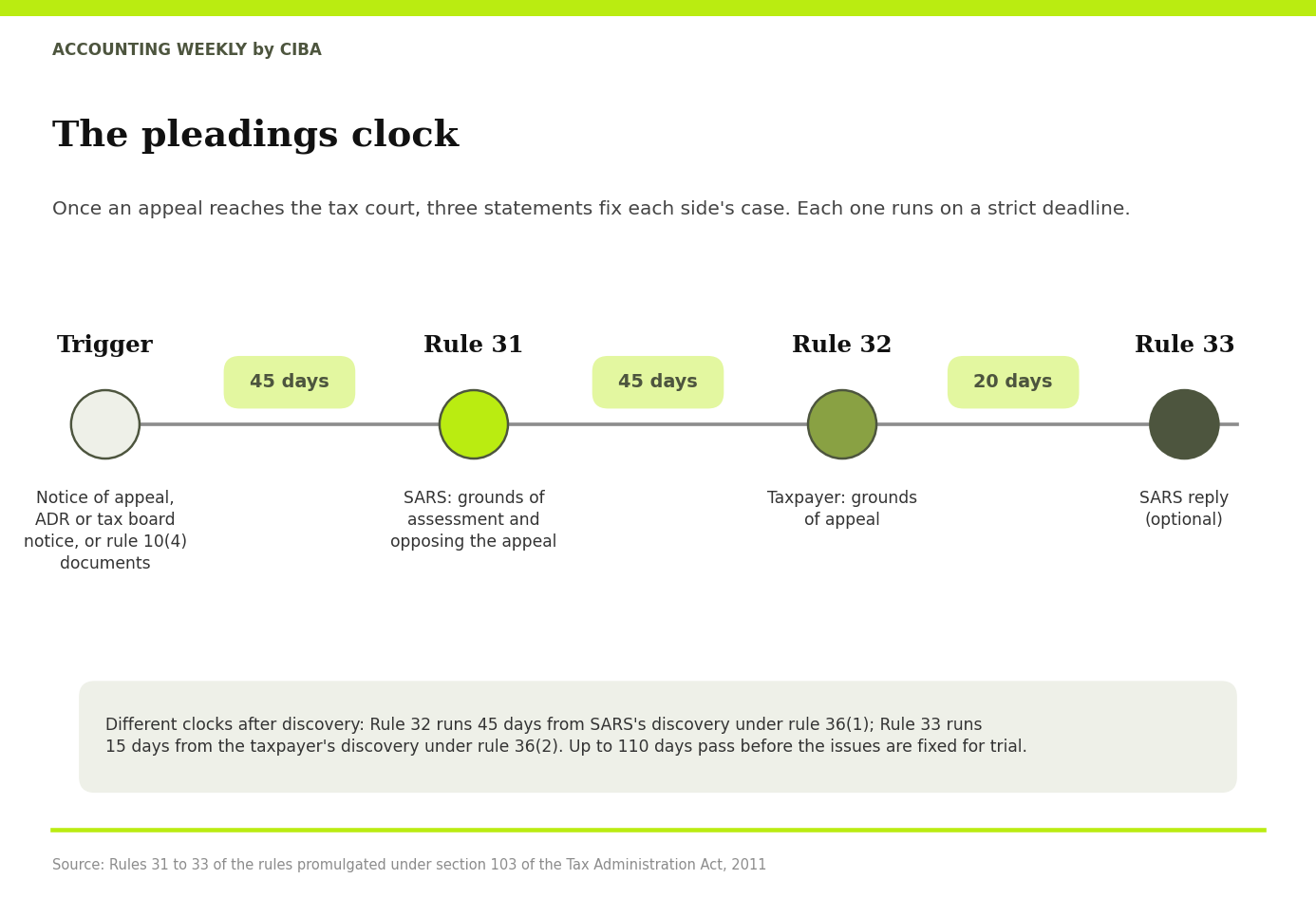
The rules are promulgated under section 103 of the Tax Administration Act and sit in Part E of the dispute resolution rules. The three statements work like pleadings in a civil case: they tell each side what case it has to meet. The full text of each rule is set out at the end of this article.
Both sides may add something new, within limits
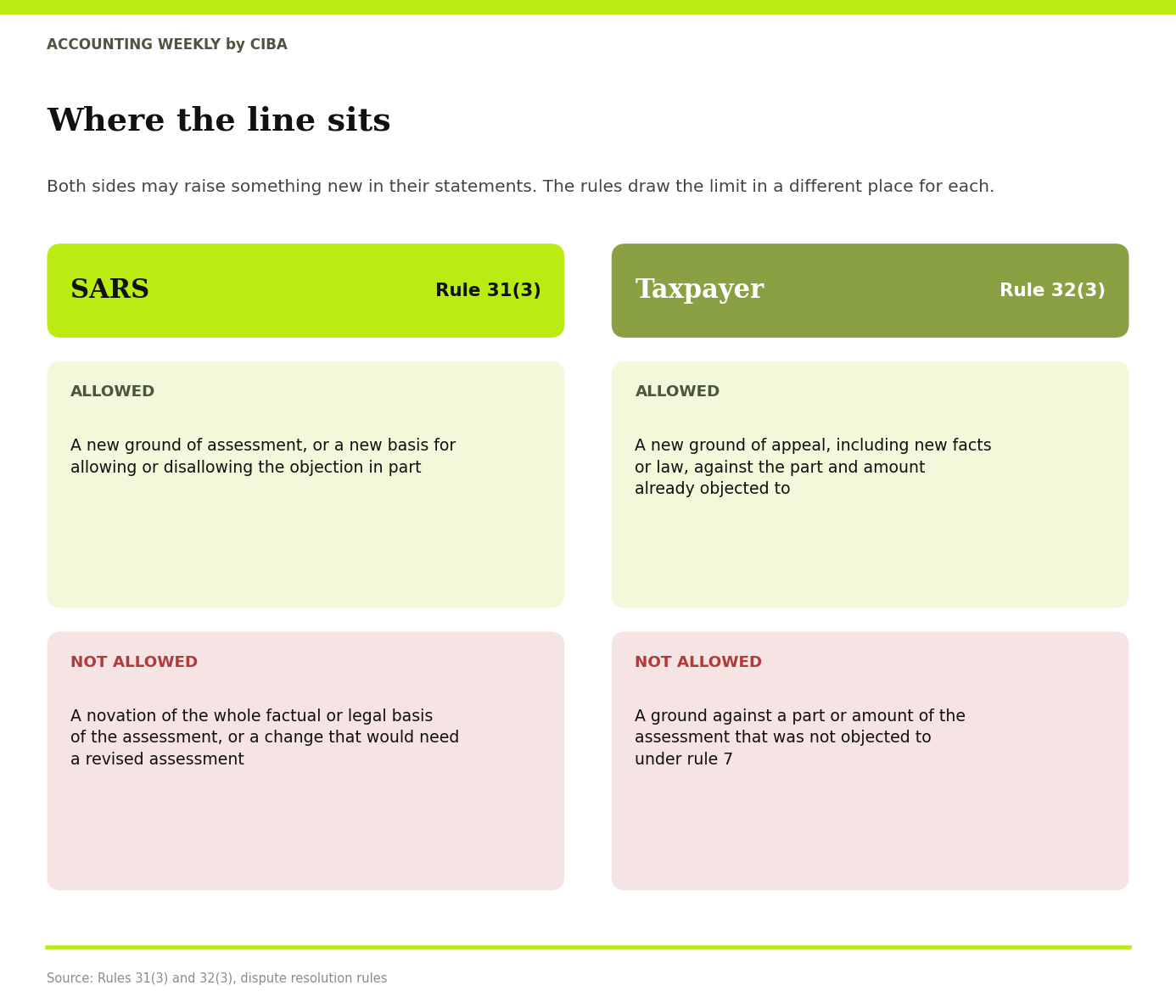
SARS's limit is a novation: it may refine the grounds of its assessment, but not replace the whole factual or legal basis. The taxpayer's limit is the rule 7 objection: new facts or law are allowed if they attack a part and amount of the assessment that was objected to. The three cases below test each limit.
Case 1: Erasmus (Supreme Court of Appeal)
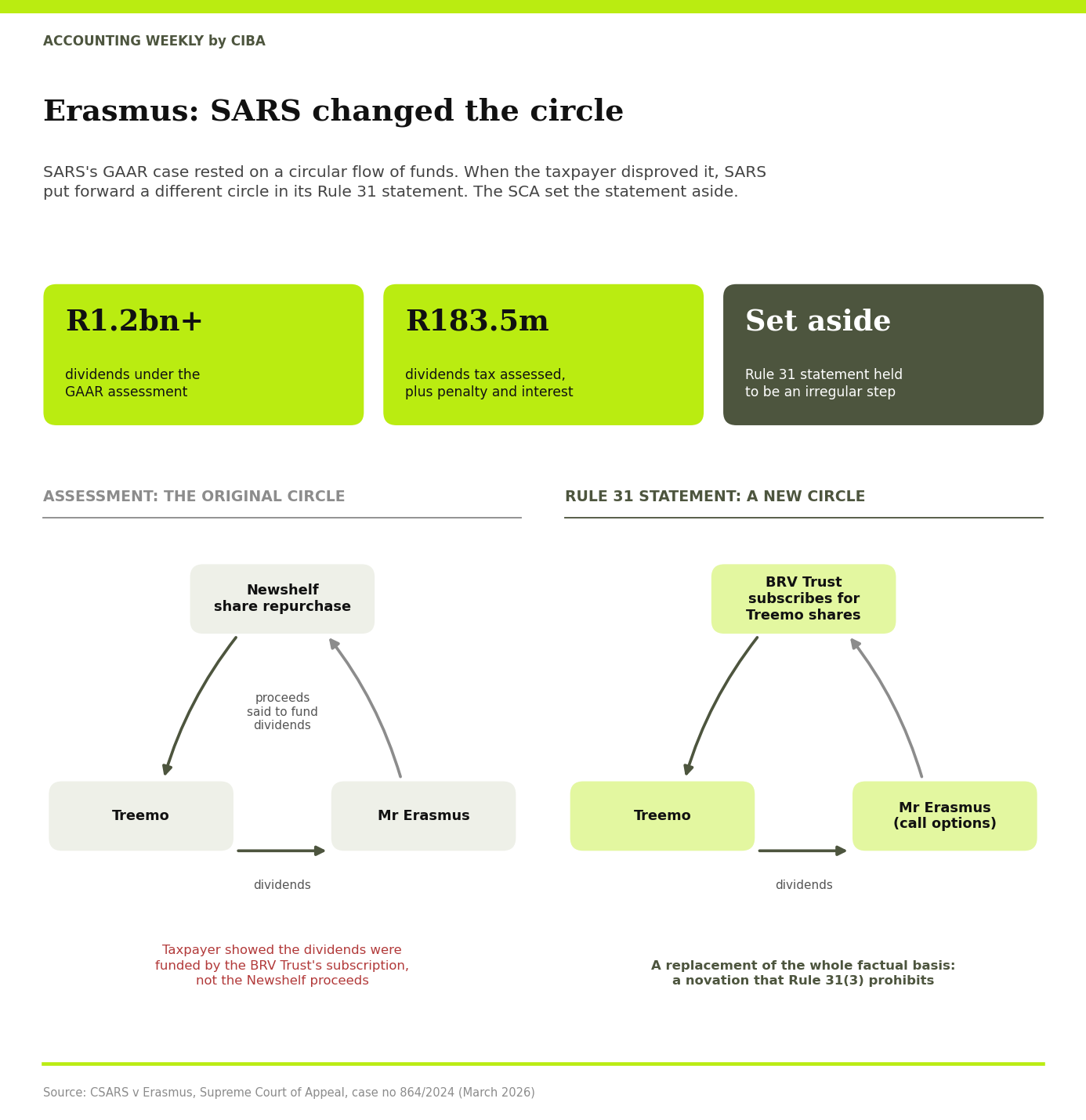
In CSARS v Erasmus, SARS raised a GAAR assessment under sections 80A to 80L of the Income Tax Act. Its case was that the proceeds of the Newshelf share repurchase funded the dividends Treemo paid to Mr Erasmus. The taxpayer showed that the dividends were in fact funded by the BRV Trust's subscription for Treemo shares. In its Rule 31 statement, SARS then placed the circular flow between the Trust's subscription, the taxpayer's call options and the dividends.
The SCA held that this replaced the whole factual basis of the assessment, which Rule 31(3) prohibits. It upheld the order setting the Rule 31 statement aside as an irregular step and dismissed SARS's appeal with costs. Section 80J(4) of the Income Tax Act does allow SARS to revise its reasons in a GAAR matter, but that power applies earlier in the process, before the matter reaches the tax court. It cannot justify a new GAAR assessment brought in through a Rule 31 statement.
For practitioners: compare SARS's Rule 31 statement with the assessment and the letter of audit findings. If the foundation has been replaced rather than refined, the statement can be challenged as an irregular step.
Case 2: Taxpayer KG (Tax Court)
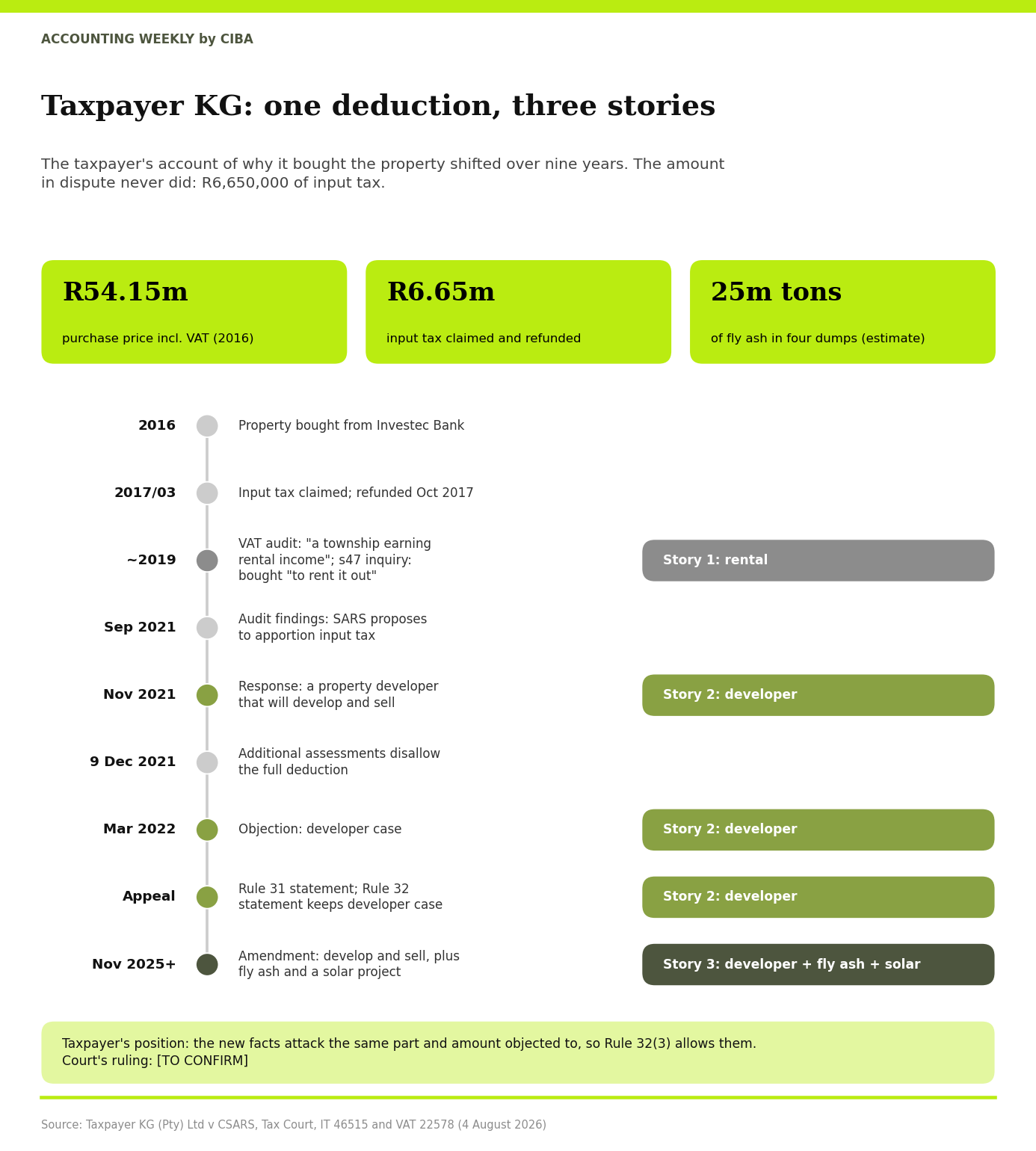
The taxpayer bought Taxpayer Township, which includes commercial and residential units, fly ash dumps and electricity reticulation infrastructure from a former Eskom power station. SARS refunded the R6,650,000 input tax claimed, then audited the claim about two years later. At a section 47 inquiry, the taxpayer's former accountant said the property was bought "to rent it out". A section 47 inquiry is an interview a senior SARS official can require a person to attend, for example to clarify issues or speed up an audit. It may not be used for a criminal investigation.
After its new attorneys were appointed in November 2025, the taxpayer sought to amend its case to add the fly ash and a solar energy project as purposes for the purchase. It accepted these were new factual allegations. Its argument is that they are further reasons why the same R6,650,000 deduction should be allowed, aimed at the same part and amount objected to under rule 7, so Rule 32(3) permits them.
For practitioners: what the client tells SARS during an audit and at a section 47 inquiry follows it to court. A purpose raised years later can still be pleaded if it supports the same disputed amount, but it will be tested against everything said before.
Case 3: TALT (High Court, Gauteng Division)
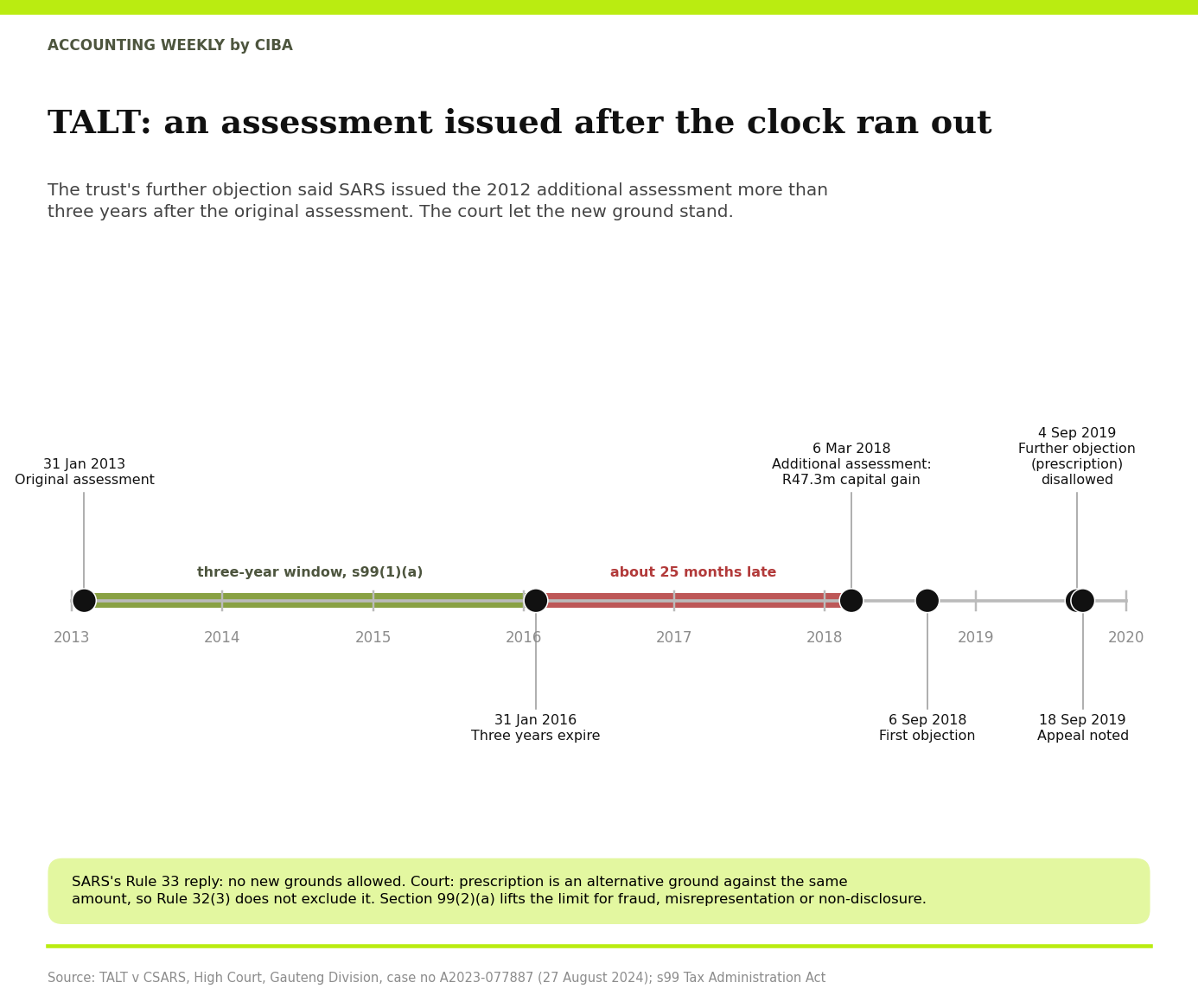
The taxpayer, an inter vivos discretionary trust, first objected to the 2012 additional assessment on other grounds. It then lodged a further objection on prescription: under section 99(1)(a) of the Tax Administration Act, SARS may not assess more than three years after the original assessment. In its Rule 33 reply, SARS argued that the trust could not introduce new grounds of appeal for the 2012 year.
The court disagreed. Prescription was an additional ground aimed at the same part and amount of the assessment originally objected to. The trust had repackaged its legal basis, and its two objections were alternative reasons for disputing the same amount. The court found for the taxpayer.
For practitioners: a ground missed at objection stage is not necessarily lost. What counts is whether it attacks the same part and amount of the assessment.
The test is what the new ground does
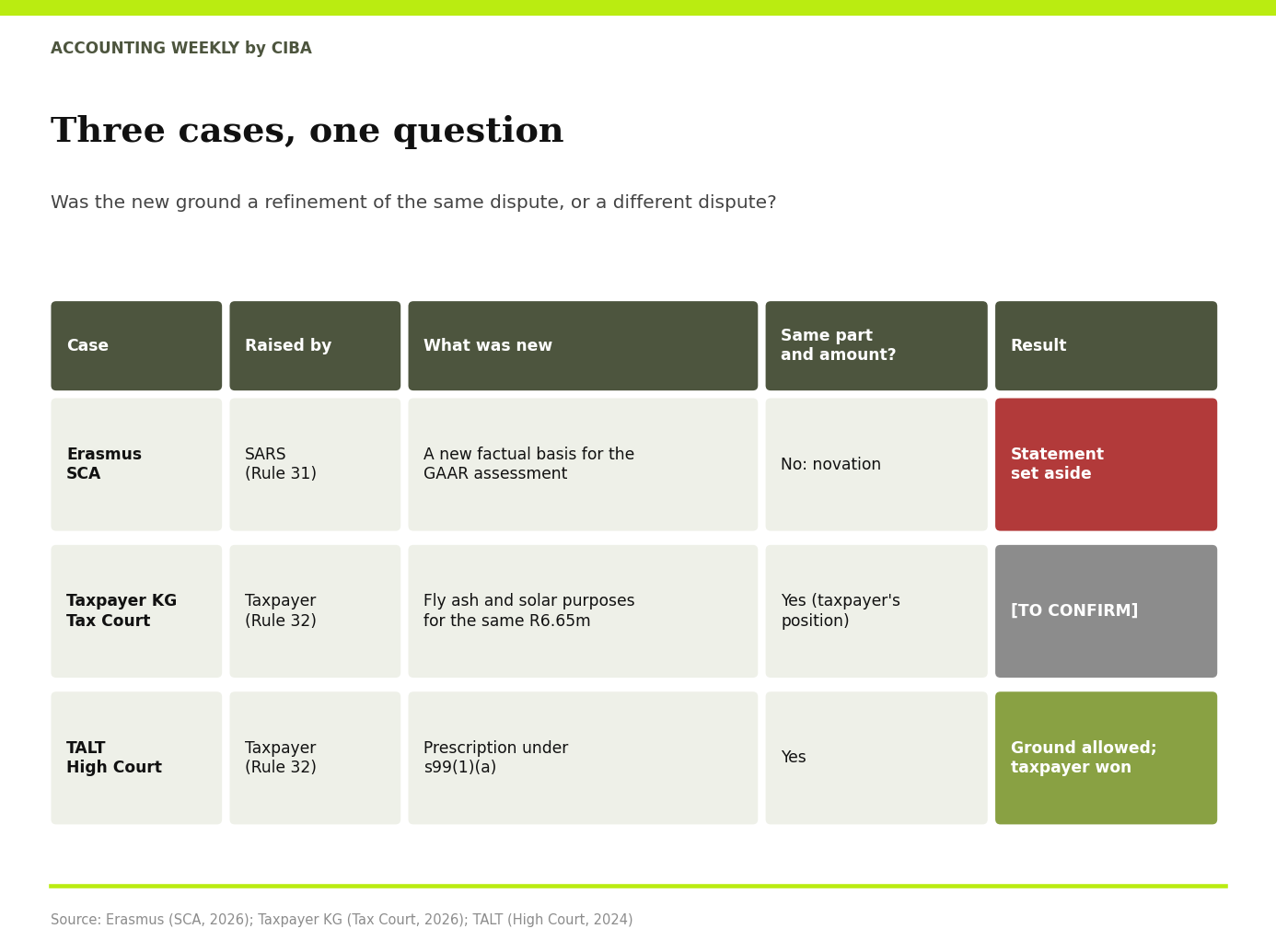
The courts did not apply one uniform yardstick. Each matter turned on its facts and, on the nature, and effect of the new ground. Practitioners entering this area need to know where both limits sit before they draft an objection, because the objection fixes the ground the appeal can later stand on.
The rules in full
Rule 31. Statement of grounds of assessment and opposing appeal
(1) SARS must deliver to the appellant a statement of the grounds of assessment and opposing the appeal within 45 days after delivery of—
(a) the documents required by SARS under rule 10(4);
(b) if alternative dispute resolution proceedings were followed under Part C, the notice by the appellant of proceeding with the appeal under rule 24(4) or 25(3);
(c) if the matter was decided by the tax board, the notice of a de novo referral of the appeal to the tax court under rule 29(2); or
(d) in any other case, the notice of appeal under rule 10.
(2) The statement of the grounds of opposing the appeal must set out a clear and concise statement of—
(a) the consolidated grounds of the disputed assessment;
(b) which of the facts or the legal grounds in the notice of appeal under rule 10 are admitted and which of those facts or legal grounds are opposed; and
(c) the material facts and legal grounds upon which SARS relies in opposing the appeal.
(3) SARS may include in the statement a new ground of assessment or basis for the partial allowance or disallowance of the objection unless it constitutes a novation of the whole of the factual or legal basis of the disputed assessment or which requires the issue of a revised assessment.
Rule 32. Statement of grounds of appeal
(1) The appellant must deliver to SARS a statement of grounds of appeal within 45 days after delivery of—
(a) the required documents by SARS, where the appellant was requested to make discovery under rule 36(1); or
(b) the statement by SARS under rule 31.
(2) The statement must set out clearly and concisely—
(a) the grounds upon which the appellant appeals;
(b) which of the facts or the legal grounds in the statement under rule 31 are admitted and which of those facts or legal grounds are opposed; and
(c) the material facts and the legal grounds upon which the appellant relies for the appeal and opposing the facts or legal grounds in the statement under rule 31.
(3) The appellant may include in the statement a new ground of appeal unless it constitutes a ground of objection against a part or amount of the disputed assessment not objected to under rule 7.
Rule 33. Reply to statement of grounds of appeal
(1) SARS may after delivery of the statement of grounds of appeal under rule 32 deliver a reply to the statement within—
(a) 15 days after the appellant has discovered the required documents, where the appellant was requested to make discovery under rule 36(2); or
(b) 20 days after delivery of the statement under rule 32.
(2) The reply to the statement of grounds of appeal must set out a clear and concise reply to any new grounds, material facts or applicable law set out in the statement.
References
Legislation
• Income Tax Act 58 of 1962, as amended up to 24 December 2024
• Tax Administration Act 28 of 2011, as amended up to 24 December 2024
• Rules promulgated under section 103 of the Tax Administration Act, 2011 (dispute resolution rules), Part E
SARS guide
• SARS, Dispute Resolution Guide: Guide on the Rules Promulgated in terms of Section 103 of the Tax Administration Act, 2011, Issue 3, 23 May 2023
Cases
• CSARS v Erasmus, Supreme Court of Appeal, case no 864/2024, judgment delivered March 2026 [TO CONFIRM: exact date]
• Taxpayer KG (Pty) Ltd v CSARS, Tax Court, case nos IT 46515 and VAT 22578, 4 August 2026
• TALT v CSARS, High Court, Gauteng Division, case no A2023-077887, 27 August 2024