Cheques Died. The Liability Didn't.
This article will count 0.25 units (15 minutes) of unverifiable CPD. Remember to log these units under your membership profile.
Your client's director signs the back of a customer's promissory note. The bank wanted a signature before it would discount the paper. Everyone called it a formality.
Eighteen months later the customer collapses. The bank does not chase the customer. It chases your client, and it can have judgment before any trial on the merits.
The Act nobody thinks about anymore
Banks stopped processing cheques at the end of 2020. Most practitioners quietly filed the Bills of Exchange Act 34 of 1964 under history at the same time.
The cheque died. The Act did not.
Promissory notes are still the workhorse of SME credit. Shareholder loans, payment arrangements, family trust advances, machinery and plant deals. Acknowledgments of debt still get drawn up every time a customer falls behind. And signatures still land on the backs of instruments, usually because someone needed cash today and a bank asked for one more name.
Your clients call all of that a formality. The Act calls it liability.
Every signature adds a debtor
The Act does one thing with brutal consistency. It attaches liability to signatures, not to intentions.
No signature on the instrument, no liability on the instrument. The other half is the problem. If your client has signed it, they are on it, and the holder does not need to prove a contract with them. It needs to prove a signature.
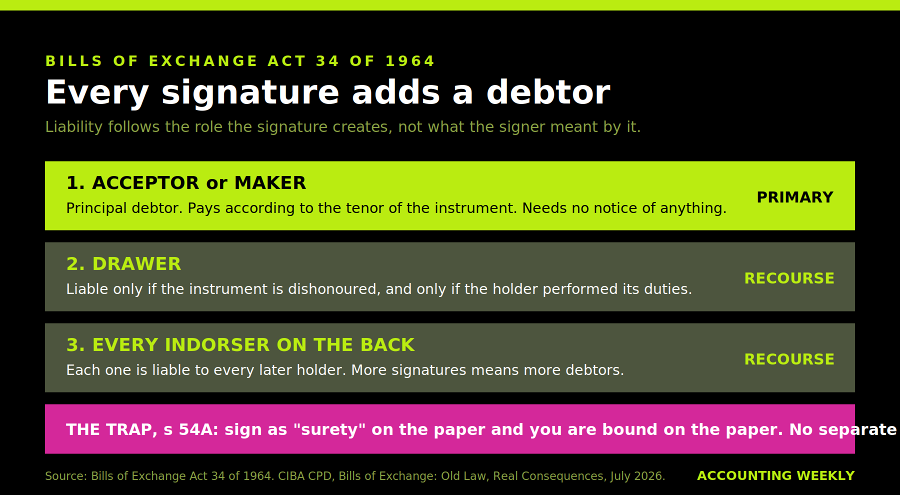
Figure 1: The liability ladder under the Bills of Exchange Act 34 of 1964.
The acceptor of a bill and the maker of a note are the principal debtors. They pay according to the terms on the face of the paper, and nobody has to warn them first. The drawer and every indorser sit behind them on recourse liability, which is conditional and can be lost.
Then there is the one that catches directors. Sign an instrument as surety, even with the word borg scrawled next to a bare signature, and you are bound on the instrument itself. No separate deed of suretyship. No separate contract. The signature on the paper is the liability.
Directors do this at month end, under pressure, to keep a facility open. They think they have given comfort. They have signed themselves onto the paper.
Two things that make this faster and colder than a contract claim
First, speed. A properly drawn promissory note is a liquid document. It proves the debt on its face, which puts the holder into provisional sentence proceedings. In practice that means your client can be ordered to pay first and argue later.
There is one narrow escape, and it is worth knowing because most summaries leave it out. The Constitutional Court developed the common law to give a court a discretion to refuse provisional sentence, but only where the defendant shows both an inability to pay the judgment debt in order to enter the main case, and a reasonable prospect that oral evidence could tip the balance in their favour. That is a narrow door. Plan on the assumption your client will not fit through it.
Second, the defences vanish. The Act sets out who qualifies as a holder in due course. A person who took the paper complete and regular on its face, before it was overdue, with no notice of a previous dishonour, in good faith and for value, and with no notice of a defect in the transferor's title. A discounting bank almost always qualifies.
The holder in due course takes the instrument free of defects in the title of prior parties and free of the personal defences those parties had against each other.
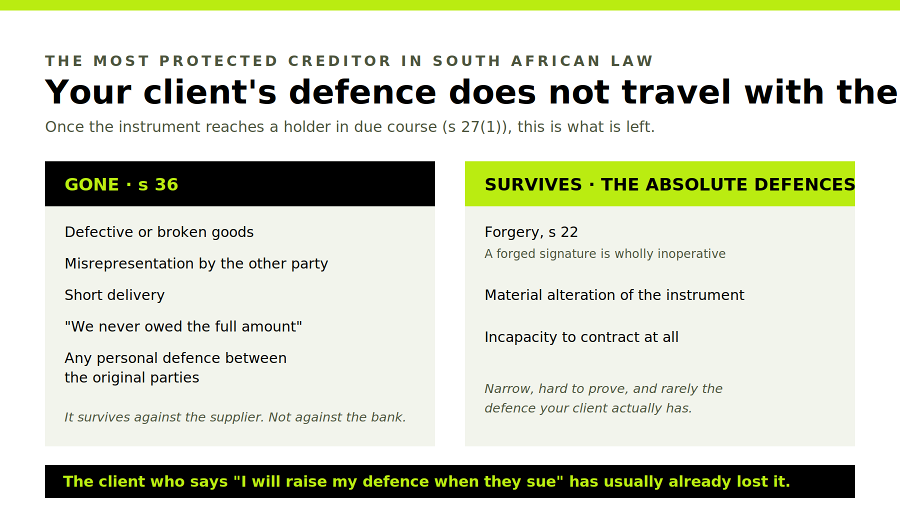
Figure 2: What is left of your client's defence once the paper is negotiated.
Read that against a real file. A wholesale distributor takes a note for stock. The stock was short delivered. The supplier discounts the note to a bank. The bank sues. The short delivery is a personal defence between the distributor and the supplier, so it survives against the supplier and dies against the bank. Your client pays the bank in full, then chases the supplier separately, carrying all the cost, the delay and the insolvency risk of doing so.
Only the heavyweight defences survive. Forgery, where a forged signature is considered wholly inoperative. Material alteration. Incapacity to contract at all. Nothing softer.
The client who says “I will raise my defence when they sue” has usually already lost it.
When your client is the one who is owed
Flip the file around. Now your client holds the paper and it has bounced.
A dishonoured instrument is not the end of the claim. Missing the follow up is. Recourse liability survives on three duties. Present the instrument properly, on the due date, at the proper place. Give notice of dishonour to the drawer and to every indorser within a reasonable time, which is measured in days. Protest a dishonoured foreign bill by notarial act, which you will meet in cross border trade.
Miss one and the secondary parties are discharged. The principal debtor stays bound, but every extra name that made the paper worth taking walks out quietly.
Picture the standard version. The note bounces in March. The client sends a few reminders. An attorney is briefed in August. The maker is still on the hook and everyone else left in the first week.
Six ways it actually goes wrong
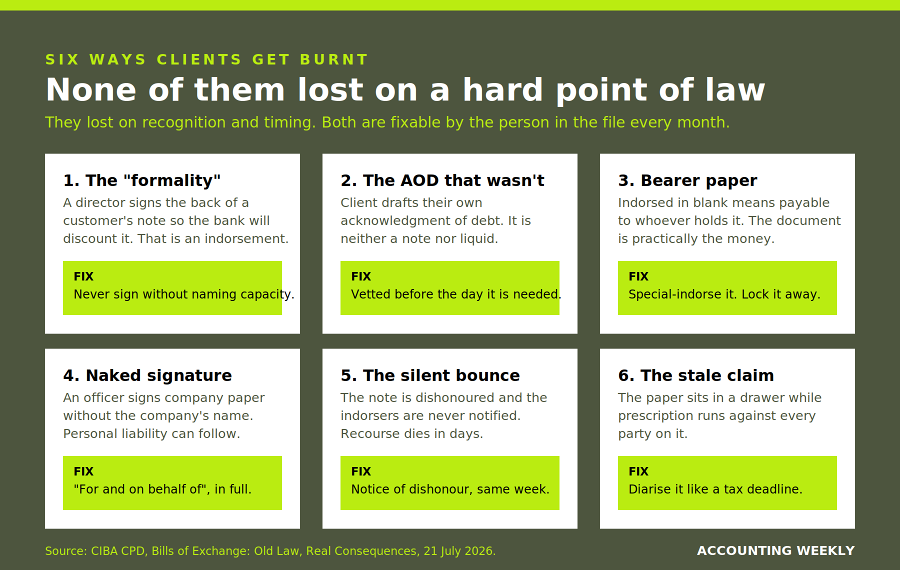
Figure 3: Six recurring failures, and the fix for each.
Look at that grid and notice what is not on it. Not one of those clients lost on a difficult point of law. They lost on recognition and on timing.
Recognition and timing are exactly what somebody sitting in the file every month is positioned to fix. That is not a lawyer's advantage. It is yours.
Where your lane ends
Be precise about this, because enthusiasm is how a good service becomes a professional indemnity claim.
An attorney gives the legal advice and the formal opinion, drafts the instrument, demands on it, sues on it including provisional sentence, and defends it. You recognise the negotiable instrument in the records, quantify the exposure, flag the signature risk, stop the signature in time and refer. The boundary is the same one set out in just because you can does not mean you should.
Refer in writing, every time. On the day something goes wrong, the difference between remembering that you mentioned it and an email that proves you did is the difference between a comfortable file review and a very uncomfortable one. That principle runs through everything we have written on contract risk and how fast people sign, and on what happens when the financials you compiled were used to secure a facility.
Your CIBA designation includes a free legal helpline. Use it for the first question, which is usually “is this thing in my client's file a promissory note”. Escalate the rest.
What to do this week
1. Pull three client files. Loans, acknowledgments of debt, and anything with a signature on the back.
2. Ask one question of each. Is this a negotiable instrument, and who is bound on it? If the answer is not sure, that is this week's conversation and the point at which you refer.
3. Diarise every instrument due date on the same calendar as your tax deadlines, with the same seriousness. Add a same week notice of dishonour reflex for anything that bounces.
4. Check the company signature habit in your clients' finance teams. “For and on behalf of” the full company name, every time. It costs nothing and it removes an entire category of personal liability.
5. Price the work. An annual instrument and recovery paper review is a defined engagement with a defined output, not a favour buried in your compliance fee. If pricing that feels uncomfortable, read stop billing hours, start selling outcomes again.
Say this to a client on Monday. Never sign the back of anything with the word pay in it until we have checked what that signature makes you.
Anyone can look up what an indorsement is in ten seconds. What your client cannot get from a machine is the adviser who reads the paper in their file, sees whose signature sits on the back, and stops the exposure before the bank calls it up. You are not becoming a bills lawyer. You are becoming harder to replace.
👉 Join CIBA and we will show you how to turn the paper in your clients' files into a priced risk service, with a free legal helpline behind you.
Further Reading
• One Signature Can Cost You Everything — Why the biggest contract risk is how fast your client reads, not what the document says.
• Your Client Signed the Loan. Are You Exposed Too? — Where your own exposure sits when the financials you compiled were used to secure credit.
• Paid Last. If You're Paid At All. — What happens to unsecured creditors when a debtor collapses, and why liquid paper changes the queue.
• Just Because You Can Doesn't Mean You Should — The scope of practice line, and what crossing it costs.
• Stop Billing Hours. Start Selling Outcomes. — How to price judgement rather than time.
This article provides general information on the Bills of Exchange Act 34 of 1964 and related procedure. It does not constitute legal advice, and no attorney and client relationship arises from it.
Choose Your Path to Exclusive Insights
Stay ahead in the world of accounting with premium content designed for professionals like you. Access expert articles, industry trends, and essential resources. Become a CIBA member and claim your CPD hours from CIBA.
CIBA Member Access
R250.00 FREE!
100% Discount when you become a CIBA Member. Join now to claim your CPD Hours. Register here: https://accounts.myciba.org/register