This article will count 0.25 units (15 minutes) of unverifiable CPD. Remember to log these units under your membership profile.
Every January starts with good intentions. New diaries. Fresh systems. Promises that this year will be calmer and better organised. And then reality hits.
By March, a SARS letter lands in someone’s inbox. A client phones in a panic. A company cannot trade because it was deregistered. An employee cannot claim benefits. Someone says the words every accountant dreads: “I thought that was done.”
This article is your early warning.
For CIBA members, missed compliance deadlines are not small admin errors. They are one of the fastest ways to lose clients, destroy trust, and expose yourself to serious professional risk. If you want one New Year’s resolution that actually protects your practice, make it this:
No missed compliance deadlines. Ever.
Compliance Is Boring Until It Becomes a Crisis
Compliance work feels repetitive. Returns look the same every year. Deadlines repeat. Forms feel routine. Because it feels ordinary, it is easy to push aside when things get busy.
That is exactly why it is dangerous.
Compliance is not paperwork. It is legal proof that a business exists, operates lawfully, pays what it must, and protects people properly. When compliance fails, there is no gentle conversation. There are penalties, interest, audits, deregistration, investigations, and sometimes personal liability.
CIBA’s view is clear. Accountants are not box tickers. They are trusted professionals who protect businesses, jobs, and economic activity. When compliance slips, real damage follows.
Where Things Usually Go Wrong
CIPC: The Silent Business Killer
CIPC deadlines are often treated as admin. Annual returns, beneficial ownership disclosures, director changes, and year-end confirmations are seen as quick tasks that can be done later.
Later often becomes too late.
When annual returns are missed, companies can be deregistered. A deregistered company struggles to trade, cannot tender, cannot open bank accounts, and may not legally enter into contracts. Directors usually find out only when something goes wrong.
CIPC systems are automated. They do not care how busy you were. Deregistration happens quietly, and the consequences arrive loudly.
If your client asks how this happened and the answer is “we missed the deadline,” that relationship is already damaged.
SARS: The One You Really Do Not Want to Upset
SARS does not forget. It does not forgive. And it does not get tired.
Late income tax returns, VAT submissions, PAYE filings, and provisional tax calculations trigger penalties and interest very quickly. One late submission often leads to another. Soon, the client’s profile looks risky, and SARS starts paying attention.
Audits and verifications rarely arrive without warning signs. Late compliance is one of them.
When SARS letters arrive, they consume time, energy, and patience. Clients panic. You scramble. Work that should have taken minutes now takes hours. All of it was preventable.
UIF: Ignored Until Someone Needs Help
UIF compliance is often ignored because nothing happens immediately when it is late.
Until something happens.
An employee gets sick. Goes on maternity leave. Is retrenched. Then UIF compliance suddenly matters a lot. Benefits cannot be claimed. Employers face backdated liabilities. Employees are angry and scared. The accountant gets the call.
UIF compliance is not just technical. It affects real people and their income. When it fails, trust disappears very quickly.
Compensation Fund: The Risk Everyone Underestimates
Workman’s Compensation is one of the most neglected compliance areas in small businesses. Annual returns are missed. Assessments are unpaid. Proof of cover cannot be found.
Then an employee is injured.
Without valid compliance, there may be no cover. Employers face legal exposure. Medical costs become a problem. Lawyers appear. What was ignored for years becomes urgent overnight.
This scenario is not rare. It happens more often than most professionals like to admit.
Financial Crime and AML Compliance: The One That Can End Your Practice
If your business or your client is an accountable institution, financial crime compliance is not optional.
This means registration with the Financial Intelligence Centre (FIC) and ongoing compliance with anti-money laundering requirements.
You must be registered. You must have a proper Risk Management and Compliance Programme. You must do client due diligence. You must keep records. You must report suspicious or unusual transactions.
Hoping you will not be checked is not a strategy.
FIC enforcement is increasing, and inspections are real. Fines can be severe. Criminal sanctions are possible. The reputational damage can be permanent.
When FIC action happens, it is not private. Banks, regulators, and clients find out. Trust disappears quickly, and rebuilding it is extremely difficult.
This is one area where “we did not know” offers no protection.
Data Protection and Privacy: The Risk Sitting on Your Computer Right Now
Data protection is not a future problem. It is a current one.
The Protection of Personal Information Act applies to almost every business. If you process personal information, it applies to you. That includes client data, employee records, supplier details, ID numbers, banking information, tax numbers, and contact details.
In other words, if you are an accountant, POPIA applies.
POPIA requires proper data handling, reasonable security measures, clear privacy notices, and procedures for managing data breaches. It also requires you to know where data is stored, who can access it, and what happens when something goes wrong.
Many practices believe they are compliant because they use antivirus software and passwords. That is not enough.
A lost laptop, a hacked email account, or one email sent to the wrong person can trigger a data breach. Once that happens, reporting obligations follow. Fines, civil claims, and loss of client trust are real risks.
Clients trust you with their most sensitive information. Once that trust is broken, it is very hard to recover.
Why Compliance Discipline Sets You Apart
CIBA members operate in a demanding environment. Clients are under pressure. Fees are questioned. Time is limited.
What sets strong professionals apart is reliability.
Clients may argue about fees. They do not forgive deregistration, SARS penalties, failed UIF claims, or data breaches. When that happens, they do not complain loudly. They quietly leave.
Meeting compliance deadlines protects your clients, but it also protects your reputation, your income, and your professional standing.
The Real Cost of “We Will Do It Later”
Late compliance does not save time. It creates more work.
Late submissions lead to rushed work. Rushed work leads to errors. Errors lead to audits, penalties, and stress. Stress leads to burnout and unhappy clients.
Over time, this turns a practice into one that is always reacting instead of leading. That is exhausting and unsustainable.
Make This the Year Compliance Runs Like a System
A good New Year’s resolution is practical.
This year, commit to proper compliance discipline. Use clear calendars. Set reminders early. Communicate deadlines clearly. Make clients responsible for delivering information on time. Treat compliance as a professional service, not free admin work done at night.
When deadlines are met, crises disappear. When crises disappear, your practice becomes calmer, more profitable, and more respected.
Compliance is not exciting.
But non-compliance is terrifying.
If you want fewer emergency calls, fewer SARS letters, fewer angry clients, and a stronger practice, start with one simple decision this year:
Never miss a compliance deadline again.
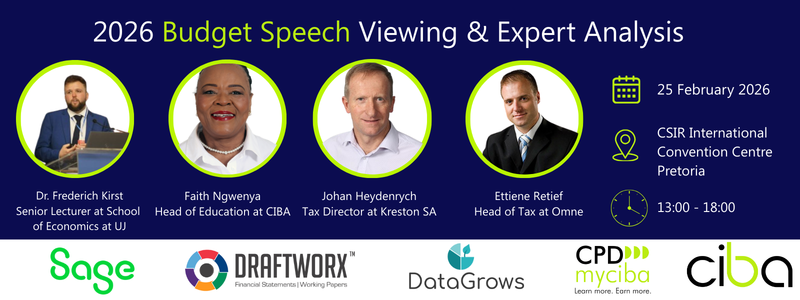
🔴 LIVE: 2026 Budget Speech Viewing & Expert Analysis
Understand the Budget as it happens. Know what to do next.
On 25 February 2026, South Africa’s National Budget Speech will set the tone for tax, compliance, and economic decision-making in the year ahead. CIBA invites you to a live Budget Speech Viewing & Expert Analysis Event, designed specifically for finance professionals who cannot afford to “wait and see” what it means.
Join us for a real-time viewing of the Budget Speech, streamed directly from Parliament, with live expert commentary translating policy announcements into clear, practical implications for your practice and your clients.
You will hear expert insights from Johan Heydenrych, Ettiene Retief, and Dr Frederich Kirst, as the Budget unfolds — not weeks later.
Whether you advise clients, manage tax risk, or lead financial decisions, this session helps you move from policy to action immediately. The event concludes with a cocktail networking session for in-person attendees.
📍 Venue: CSIR International Convention Centre, Pretoria
🕐 Time: 13:00 – 16:00 (Cocktails from 16:00)
💻 Attendance: In-person or Online
🎟️ Limited seats available
IN-PERSON: Register here
ONLINE: Register here
Don’t just hear the Budget. Understand it. Apply it.
#BudgetSpeech2026 #TaxProfessionals #FinanceLeadership #CIBA #SAEconomy



Trending