Your Fees Are Running on Autopilot Too
This article will count 0.25 units (15 minutes) of unverifiable CPD. Remember to log these units under your membership profile.
It is month-end. You are sending out the same fee you set three years ago, plus the annual escalation. It felt right back then. Nobody has re-derived it since.
Do not feel bad. The government did exactly the same thing with the petrol price. The difference is that the government has now noticed, and it is doing something about it.
The state just audited its own formula
The Minister of Mineral and Petroleum Resources says South Africans should be paying around R14 a litre for fuel, not over R20. His department's 2026/27 Annual Performance Plan commits to a full review of the fuel price formula this financial year. The wholesale, retail, storage, and distribution margins will be pulled apart, re-costed against real data, and reduced where the numbers do not justify them.
Read that again as a practitioner. A pricing formula ran on autopilot for years. Escalations were applied to a base nobody re-examined. Eventually the price drifted so far from the underlying reality that it took a ministerial intervention to fix it. Sound familiar?
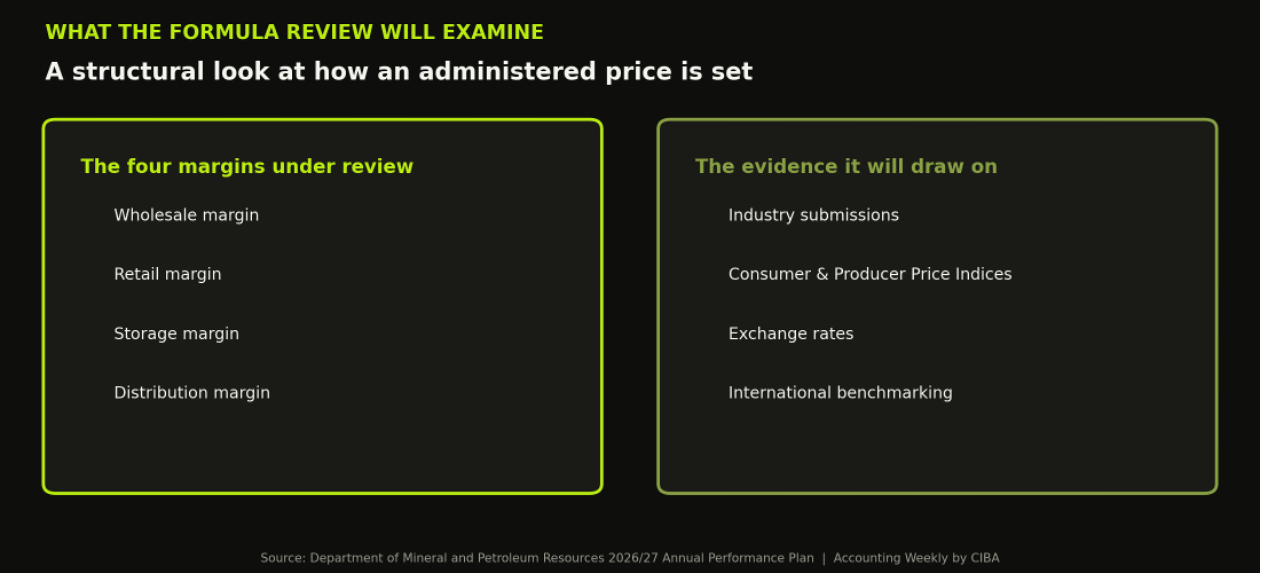
Figure 1: The DMPR's review will re-derive a formula that ran unexamined for years. Your practice can do the same in a week.
A stale formula always costs someone
In the fuel formula, the drift costs the payer. Every litre carries whatever the formula recovers, examined or not. In your practice, the drift usually runs the other way. It costs you.
Think about what has changed since you last built a fee from scratch. Your software subscriptions have multiplied. Salaries have moved. SARS interactions take longer and happen more often. That construction client you priced in 2022 now has a second entity, a VAT audit behind them, and double the queries. Your fee has moved by CPI. The work has not moved by CPI.
An annual escalation makes two silent assumptions: that the original fee was right, and that the engagement has not changed. In most small practices, both assumptions quietly failed years ago. Our practical pricing guide sets out the three-times rule: your charge-out should cover salary, overheads, and margin in equal parts. When last did you test your fees against that, using this year's salaries and this year's overheads?
The same logic applies to your systems. The document collection process you have run the same way since 2019. The manual bank recon you do because you have always done it. Doing something over and over is not efficiency. Unexamined repetition compounds, and it compounds against you. Every repeated hour of avoidable work is either billed to a client who should not carry it, or absorbed by you. Both destroy something: the relationship or the margin.
Run your own formula review
The DMPR will take a financial year to re-derive one formula. You can re-derive yours by Friday. Four steps:
1. Pick three engagements. Re-cost each from scratch. Actual hours spent, not budgeted hours, at a charge-out rate built on current salaries and current overheads.
2. Compare the derived fee to the invoiced fee. The gap is your version of R14 versus R20. Most practitioners find at least one engagement running 30% under a defensible fee.
3. Time one recurring process. Anything you repeat more than ten times a year earns a review. If a task takes 40 minutes and a template or tool cuts it to 15, that is an hour recovered every second week, per client.
4. Act at renewal. Reprice or re-scope the worst three. Show the client the re-derived build-up. A fee justified by a visible cost base is far easier to defend than an escalation letter.
And if fuel itself is squeezing your clients, that is a service, not small talk. Turn Fuel Price Pressure into Advisory Revenue shows how to package that analysis into billable work.
It took the state years, and a minister, to admit its price no longer reflected reality. Do not wait for your own R14 moment. Re-derive the formula while it is still your decision.
👉 Join CIBA and we'll show you how to stop guessing and start charging what you're worth.
Further Reading
• Effective Pricing Strategies for Accounting Firms in South Africa – The three-times rule and worked charge-out calculations to rebuild your fees from cost.
• Turn Fuel Price Pressure into Advisory Revenue – How to package fuel-cost analysis into advisory work you can charge for.
• Fuel Levy Relief Extended. But the Clock Is Ticking. – The background to the DMPR formula review and why it matters now.


Choose Your Path to Exclusive Insights
Stay ahead in the world of accounting with premium content designed for professionals like you. Access expert articles, industry trends, and essential resources. Become a CIBA member and claim your CPD hours from CIBA.
CIBA Member Access
R250.00 FREE!
100% Discount when you become a CIBA Member. Join now to claim your CPD Hours. Register here: https://accounts.myciba.org/register