AI, Efficiency and Burnout: The Hours Accountants Lose
This article will count 0.25 units (15 minutes) of unverifiable CPD. Remember to log these units under your membership profile.
That gap between the time AI saves and the time you actually keep, is now measurable. Korn Ferry surveyed more than 16,000 employees for its Workforce 2026 Global Insights Report, and the numbers describe something most South African practice owners already feel in their bones.
Adding efficiency or new value?
Nearly two thirds, 64%, said their company is more focused on driving efficiencies than on exploring new ways to add value. These are both things an AI can do well.
The actual split is also important. 63% said AI has increased their efficiency. But 52% said AI tools have increased the number of tasks expected in their role. The tool worked but the workload simply grew to fill the space it opened.
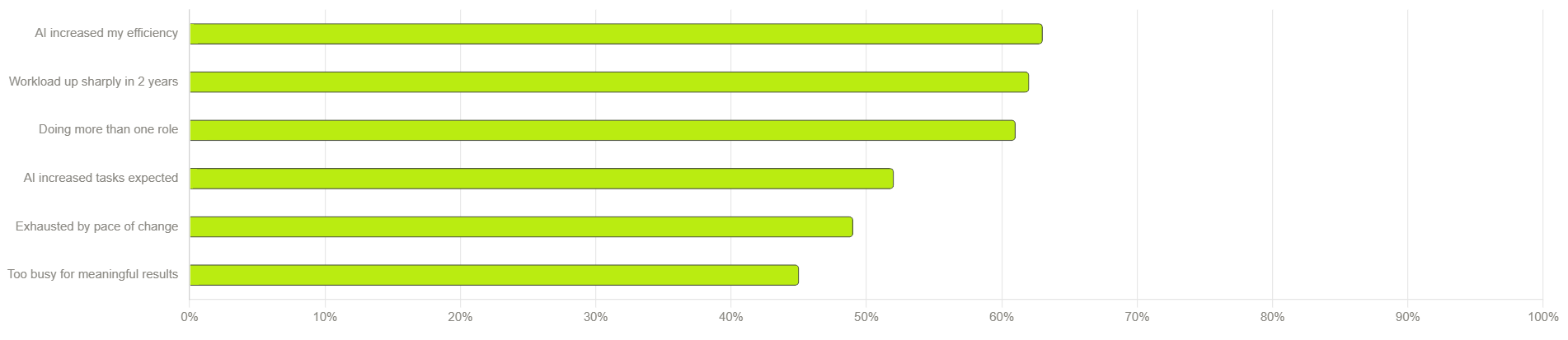
Read the bottom bar again. Nearly half the workforce is running flat out and producing nothing they consider meaningful. Korn Ferry's Jenna Young put the question plainly: "Can we sustain people feeling like they're permanently working two jobs?" Journal of Accountancy
Why this hits a small practice harder
In a big firm, the efficiency dividend disappears into a utilisation report. In a smaller practice it has nowhere to hide. You are the partner, the reviewer, the preparer and the person answering the WhatsApp at ten at night. So when AI cuts three hours off a month-end pack, those three hours go through one of three doors.
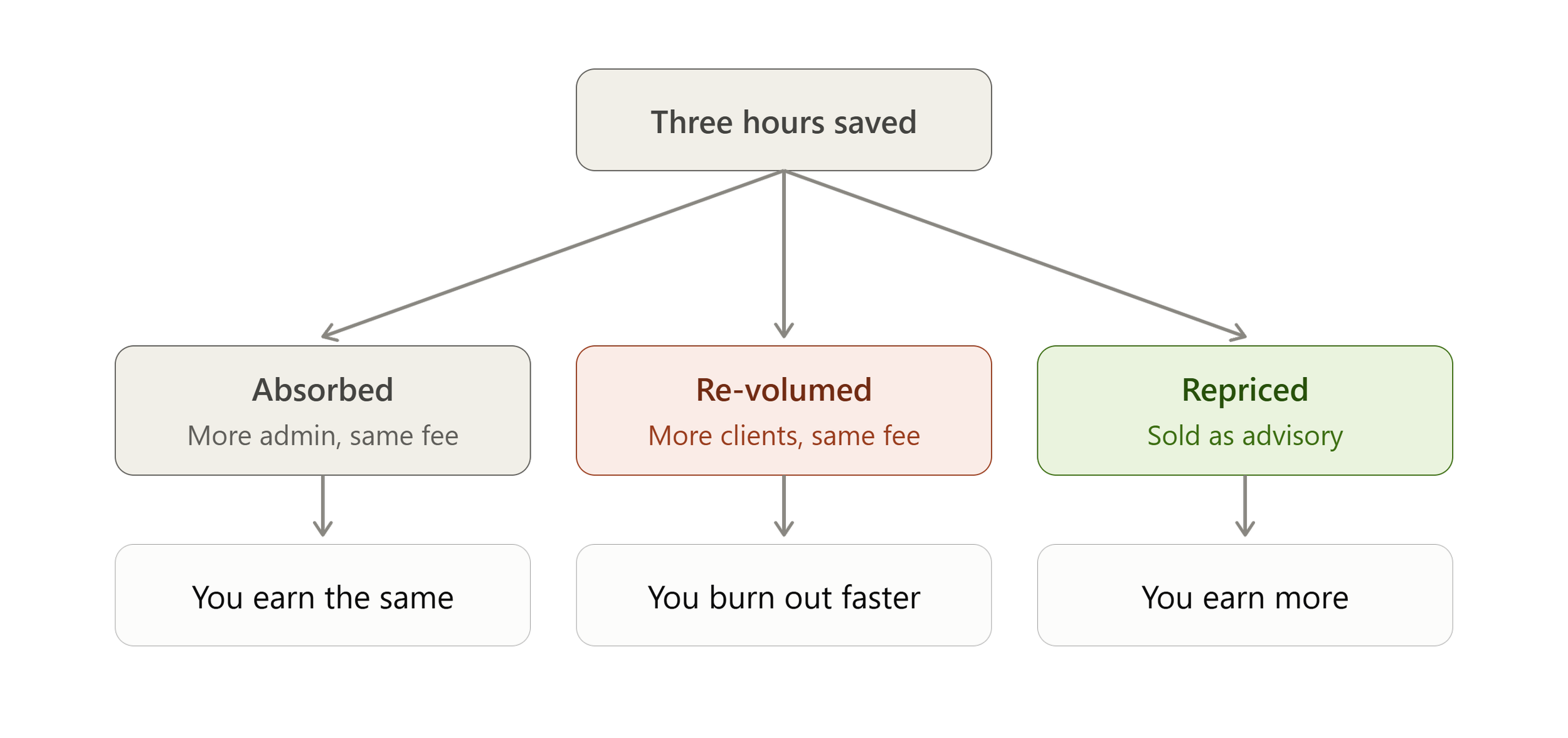
Door one is the default, and defaults win unless you interrupt them. The time evaporates into calls, SARS queries and admin. You feel no lighter and you bank no more.
Door two feels like growth. You take on more clients at the same fee because you can now handle the volume. Revenue rises, margin per client stays flat, and the exhaustion compounds. This is how a practice doubles its client list and its owner's working hours in the same year.
Door three is the only one that pays you. Client count stays steady, the fee goes up, and the freed hour gets sold back as work clients actually value. Cash flow forecasting. Tax planning. A quarterly business review they will happily pay for. Some of the tools that create that hour are set out in The Accountant's AI Toolbox.
The bill nobody costs in
There is a second invoice attached to door two as every product you push through faster is a product you reviewed less carefully. We demonstrate this problem in a previous article: Big Four AI Hallucinations: What It Means for Your Practice, the largest firms have already been caught publishing AI-generated errors in public.
ISQM 1 expressly requires quality objectives for the technological resources your firm uses. An AI tool fed client data with no approved tool list and no documented review step is an unmanaged firm resource with your name on it, whether or not anything has gone wrong yet.
The ethics side is just as important. CIBA's When Accountants Use AI: What Is Ethical and What Crosses the Line works through the practical questions, starting with whether you may upload a client's financial statements to a tool at all. Speed does not transfer responsibility. The signature at the bottom is still yours.
What to do this week
Measure it. Take your three biggest recurring jobs and write down the hours AI has actually saved, per client, per month.
Decide where that hour goes before it disappears. Sell it, bank it, or lose it. There is no fourth option.
Do not add clients at the old fee. If AI made you 20% faster, that is a pricing conversation, not an invitation to take on 20% more work.
Build a review gate. Name a reviewer and documented the checking of every AI-assisted output. Then you can bill it, quality assurance is a service, not a courtesy.
Watch your staff for the two-jobs signal. Rising rework, missed internal deadlines and resignations right after busy season are capacity problems, not attitude problems.
The tools are not the danger. The danger is letting everyone except you claim the time they free up.
👉 Join CIBA and we'll show you how to turn the hours AI gives back into advisory fees instead of unpaid overtime.
Article source: Journal of Accountancy