
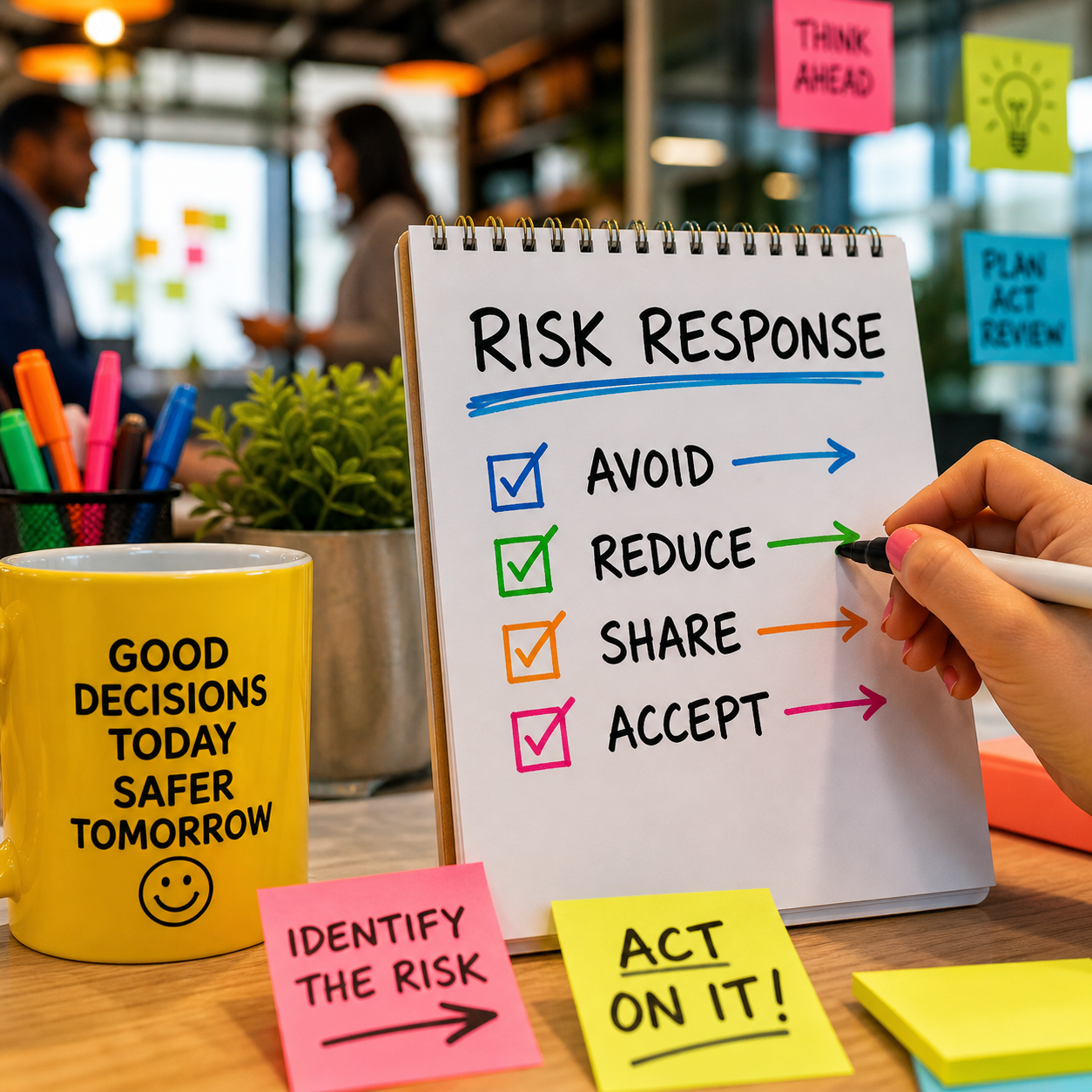
You’ve Identified the Risk… But That Was the Easy Part
Most professionals are good at spotting risk but that is only the beginning. Writing it down does not fix the problem and it does not protect the business. The real value comes from deciding what to do next and actually doing it. Whether you avoid it, reduce it, share it or accept it, the key is to make a clear choice and take action. Risk only becomes managed when something in the real world changes.

A Beginner’s Guide to IFRS S2 Climate-Related Disclosures
Climate change affects businesses, and investors want transparency. IFRS S2 provides a clear way for companies to report climate risks, covering leadership, strategy, risk management, and progress tracking. This helps businesses plan better, gain investor trust, and stay competitive in a changing world.

Understand the importance of Due Diligence?
Due diligence means checking a business carefully before buying, investing, or making a deal. It helps to find hidden problems, like debts, legal issues, or poor management. Financial due diligence checks if the company is making money and paying its bills. Legal due diligence looks at contracts and laws to avoid fines or legal trouble. Operational due diligence checks how the business runs, including employees, suppliers, and equipment. Skipping due diligence can lead to overpaying, legal risks, or unexpected costs. Taking the time to check everything helps to make better business decisions.